What is Speech Pathology
Speech pathology is about so much more than just talking.
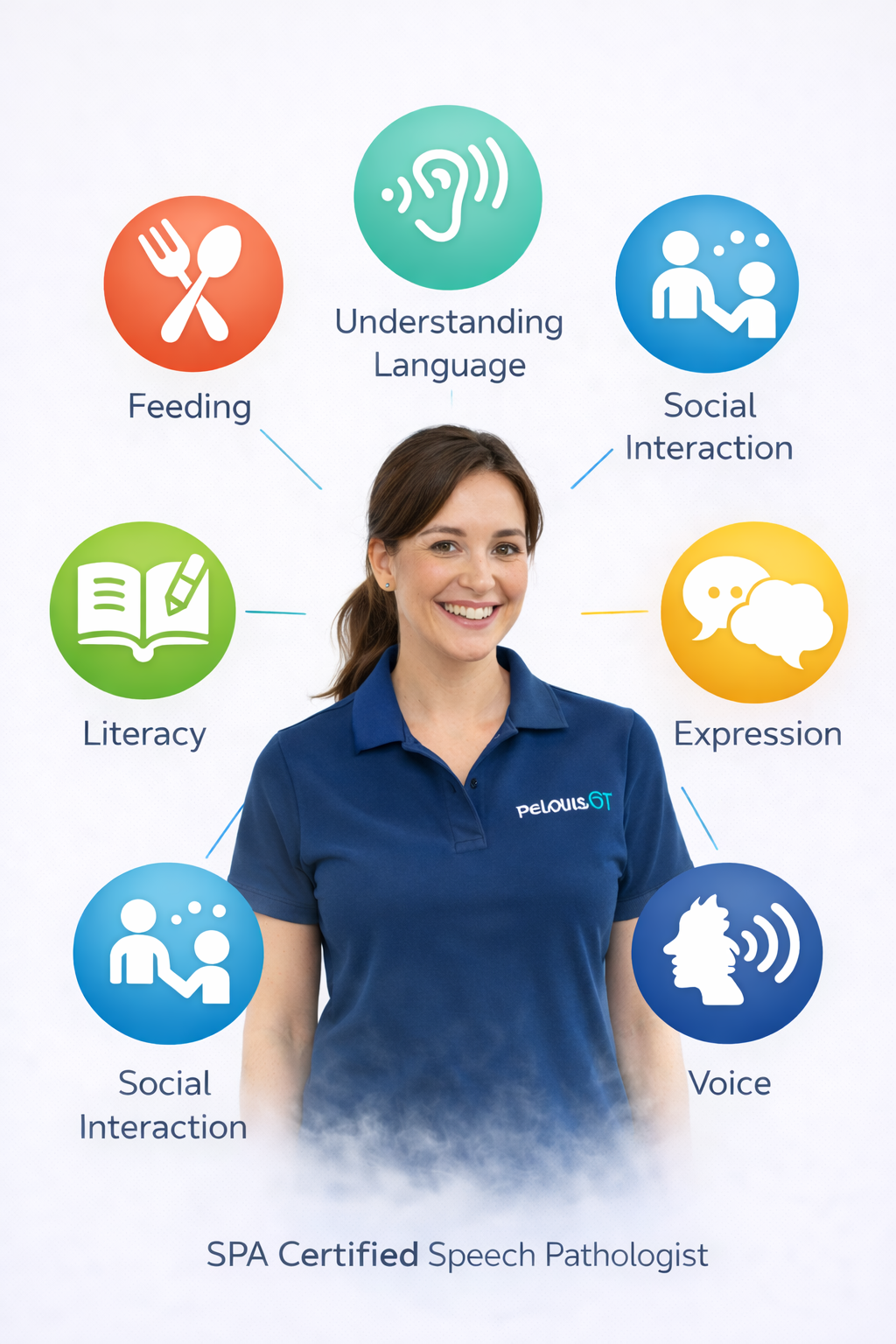
Speech pathologists support children across all areas of communication, including how they understand language, express themselves, interact socially, read and write, eat and drink, and use their voice. As recognised by Speech Pathology Australia, communication also includes literacy and swallowing, not just speech. These skills play a key role in how children learn, build relationships, and participate in everyday life.
At Pelorus, we support children who may be hard to understand, slow to start talking, struggling to keep up with instructions, finding it tough to make friends, or having difficulty with reading and spelling. Many families are surprised to learn that speech pathologists also support reading and spelling, not just spoken language. Speech pathology also includes feeding and mealtimes, so if your child is a fussy eater, gags on certain foods, or has difficulty chewing or swallowing, we can help with that too.
We do not just work with your child. A big part of what we do is working with you, your child’s educators, and their wider support team so that progress continues beyond therapy sessions and into everyday routines. Because we come to you, we see your child in the environments that matter most, whether that is home, kinder, school, or the community, allowing therapy to be practical, meaningful, and built around real life.
If your child is already seeing an Occupational Therapist at Pelorus OT, we work closely together to ensure therapy is aligned and not happening in silos. You do not need a diagnosis or an NDIS plan to see a speech pathologist. If something does not feel right, that is enough reason to get in touch.
How Our Speech Pathologists Help
Speech Clarity
Clear and understandable speech sounds for confident communication.Late Talking
Supporting early words, language development, and confident communicationLanguage Development
Represents understanding, processing, cognitionSocial Communication
Helping children build connection, interaction, & social skillsLiteracy Support
Building strong reading, spelling, and written language skillsFeeding Support
Supporting safe eating and mealtime participationStuttering Help
Improving speech fluency and communication confidenceVocal Health
Supporting clear, strong, and healthy voice for everyday communication
Things We Hear All The Time
"THEY'LL GROW OUT OF IT"
Some children do catch up on their own, but many do not. It can be difficult to tell which path your child will take without support. Research shows that early intervention leads to better outcomes, and waiting can mean missing important learning opportunities during key developmental years.
"SPEECH THERAPY IS JUST PLAYING GAMES"
It may look like play, but that is intentional. Play-based therapy is evidence-based and designed to support language development in young children. Every activity is carefully chosen to build specific skills, so when your child is having fun, they are also learning.
"MY CHILD NEEDS A CLINIC WITH SPECIALISED EQUIPMENT"
Children often learn best in the environments where they use their skills every day. Practising communication at home, during mealtimes, and with familiar people helps skills carry over into real life more effectively than clinic-only settings.
"ONCE A WEEK SESSIONS ARE ENOUGH"
Progress does not only happen during sessions. What happens between sessions is just as important. We work closely with families and educators, providing practical strategies so your child continues to learn and grow every day.
"MY CHILD JUST NEEDS TO TALK MORE"
Talking is only one part of communication. Children also need to understand language, take turns, read social cues, tell stories, and develop literacy skills. Some children may talk a lot but still find it difficult to communicate effectively.
"AAC WILL STOP MY CHILD FROM TALKING"
This is a common misconception. Research shows that AAC supports speech development, rather than replacing it. Children who use AAC are often more likely to develop spoken language over time.
"USING BABY TALK OR MULTIPLE LANGUAGES CAUSES DELAYS"
Neither of these causes speech delays. Using simple, sing-song language helps babies tune into communication, and growing up with more than one language is completely normal. Bilingual children may mix languages early on, which is a typical part of development.
Signs Your Child Might Benefit From Speech Pathology
Infants and Toddlers (0–3 years)

- Limited or reduced babbling
- Not using words or combining words
- Difficulty understanding simple instructions
- Frustration when trying to communicate
- Limited gestures like pointing or waving
- Feeding difficulties with textures or chewing
Preschool Children (3–5 years)

- Speech difficult to understand
- Using short or incomplete sentences
- Difficulty interacting with other children
- Struggles following instructions at kinder
- Limited interest in books or rhyming
- Stuttering or getting stuck on words
School-Age Children (5+ years)

- Difficulty with reading, spelling, or writing
- Trouble explaining ideas or telling stories
- Difficulty following multi-step instructions
- Challenges making or keeping friends
- Speech still unclear for their age
- Ongoing or worsening stuttering
Why Choose Pelorus OT
- Fully mobile therapy across home, school, and community
- Support delivered where your child feels most comfortable
- Therapy built into real-life routines and environments
- Integrated Speech and Occupational Therapy team
- Shared goals for consistent and coordinated outcomes
- No waitlists or repeating your story across providers
- Access to ADOS-2 autism diagnostic assessments
- Flexible funding options including Medicare and private health