Supporting Independence, Safety, and Participation – Melbourne & Adelaide
At Pelorus OT, we provide Assistive Technology (AT) assessments, equipment prescription, and training to support individuals in achieving greater independence and participation in everyday life.
Assistive technology includes a wide range of equipment, devices, and environmental supports that enable individuals to perform tasks more safely, efficiently, and comfortably.
We support individuals of all ages and abilities, including those accessing the NDIS, as well as private clients, older adults, and individuals recovering from injury or illness.
Our AHPRA registered occupational therapists work across Melbourne and Adelaide, providing personalised, practical solutions that are tailored to each individual’s needs, goals, and environment.
What is Assistive Technology?
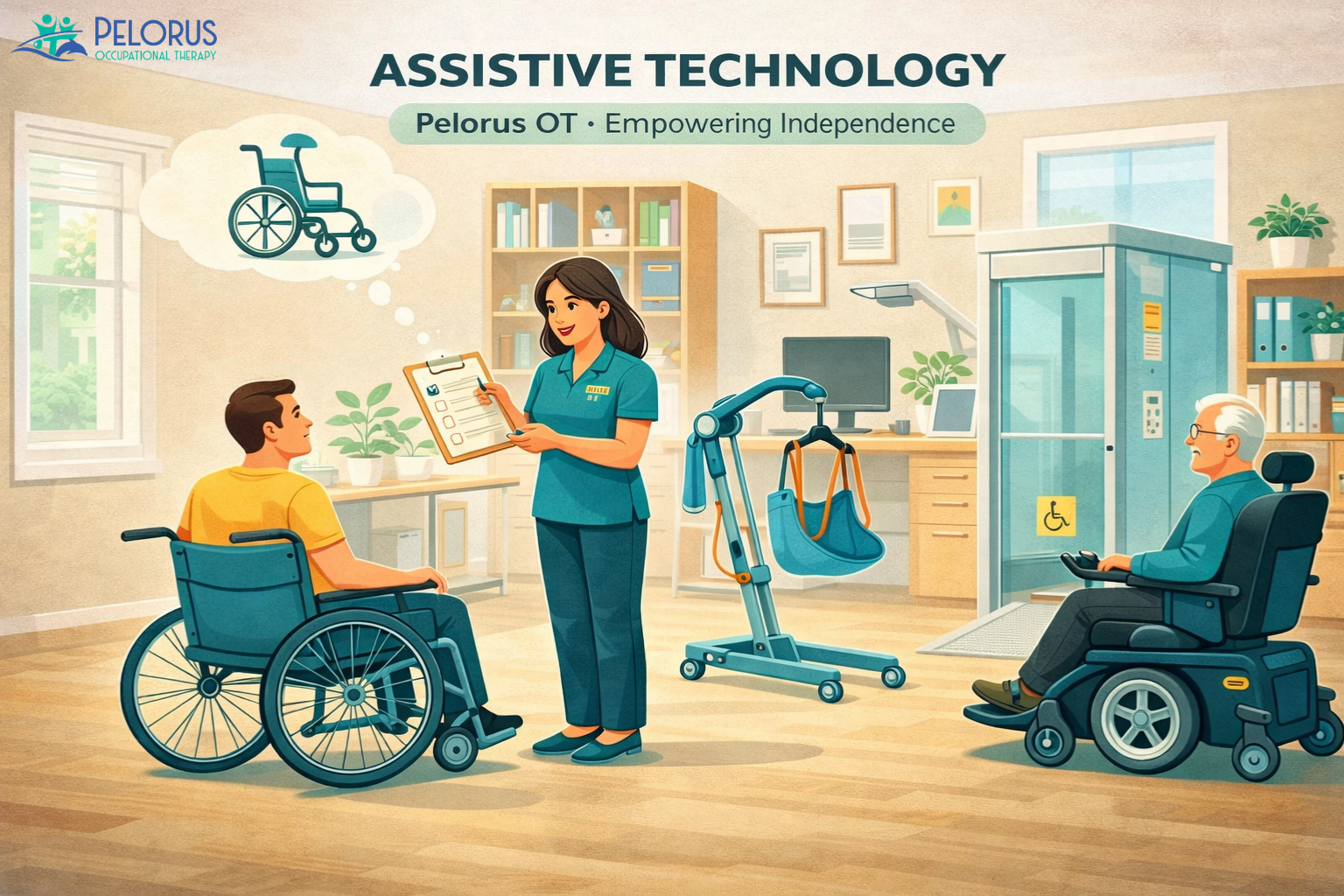
Assistive Technology refers to any equipment, device, or modification that supports a person to perform daily activities and participate more independently.
This may include supports for mobility, personal care, communication, home access, and participation in work or community settings.
At Pelorus OT, we focus on identifying the right solution for the individual, ensuring that equipment is not only appropriate, but also usable, safe, and sustainable in everyday life.
Who Can Benefit from Assistive Technology?
Assistive Technology can support individuals with a wide range of needs, including:
- Physical disabilities or reduced mobility
- Neurological conditions (e.g., stroke, brain injury)
- Developmental conditions
- Age-related changes
- Injury or post-surgical recovery
- Individuals requiring support for independence at home or in the community
Our approach is always centred around function and participation, rather than diagnosis alone.
Types of Assistive Technology
Assistive Technology can broadly be categorised into low cost and high cost supports, depending on complexity and funding requirements.
Low Cost Assistive Technology
Low cost AT includes simple, everyday equipment that supports independence and safety.
Examples include:
- Shower chairs and bath boards
- Grab rails
- Walker
- Threshold Ramps
- Adaptive cutlery and kitchen aids
- Reachers, dressing aids, and basic mobility supports
These supports are generally quicker to implement and may not require extensive reporting.
Mid & High Cost Assistive Technology
Mid & High cost AT includes more complex equipment that requires detailed assessment, trials, and formal justification.
Examples include:
- Manual and powered wheelchairs
- Mobility Scooter
- Complex seating systems
- Hoists and transfer equipment
- Assistive technology for access and positioning
In many cases, Assistive Technology and Home Modifications go hand in hand. For example, equipment recommendations may need to be considered alongside changes to the home environment to ensure accessibility and safe use. You can explore this further on our Home Modifications page.
For communication supports such as AAC (Augmentative and Alternative Communication), our Speech Pathology team at Pelorus OT can assist with assessment and recommendations where appropriate.
High Cost AT Reports and Justification
At Pelorus OT, we provide detailed Assistive Technology reports to support funding applications, including NDIS.
Our reports include:
- Comprehensive assessment findings
- Functional justification linked to daily activities
- Evidence of trials and outcomes
- Consideration of alternative options
- Alignment with NDIS Reasonable and Necessary criteria
While we provide thorough assessments and well-supported recommendations, funding decisions are ultimately made by the relevant funding body. We work closely with individuals to ensure all recommendations are clearly justified and aligned with their goals and needs.
Our Assistive Technology Assessment Process
At Pelorus OT, we follow a structured and collaborative process to ensure the best outcomes.
1. Initial Consultation
We begin with a detailed discussion to understand the individual’s needs, goals, and current challenges.
This includes:
- Functional abilities and daily routines
- Current supports and equipment
- Home, workplace, or community environment
- Personal goals and preferences
2. Functional Assessment and Follow-Up
We conduct a comprehensive assessment to understand how the individual performs everyday activities.
This includes:
- Observation of functional tasks
- Identification of barriers to independence
- Assessment of physical, cognitive, and environmental factors
3. Identifying Barriers and Solutions
We identify key barriers impacting independence and recommend appropriate assistive technology solutions that support safety, comfort, and participation.
4. Equipment Trials
Where appropriate, we organise trials of recommended assistive technology to ensure suitability, safety, and effectiveness before finalising any recommendations.
Trials are a critical and essential part of the assessment process. It is important that equipment is trialled in the presence of an Occupational Therapist, so that we can observe how the individual uses the equipment in real-life contexts, assess fit and function, and identify any adjustments required.
An Occupational Therapist is unable to recommend or sign off on assistive technology without directly evaluating the trial, as this ensures that the equipment is appropriate, safe, and aligned with the individual’s needs and goals.
We encourage individuals and families to approach this process with patience, as selecting the right equipment often requires careful consideration, adjustments, and sometimes multiple trials. Taking the time to complete this process thoroughly helps ensure the best possible outcomes in terms of comfort, safety, and long-term independence.
5. Report and Equipment Prescription
We prepare a detailed report outlining:
- Assessment findings
- Justification for recommended equipment
- Functional outcomes and benefits
- Alignment with funding requirements (if applicable)
6. Implementation and Training
We support individuals and their support networks with:
- Set-up and safe use of equipment
- Training and skill development
- Ongoing adjustments and recommendations
Our goal is to ensure that assistive technology is not only prescribed, but successfully integrated into everyday life.
Our Approach
At Pelorus OT, we take a person-centred and neuro-affirming approach.
We recognise that every individual has unique needs, preferences, and goals. Our role is to support independence and participation through practical, meaningful solutions.
We prioritise:
- Real-life usability
- Safety and comfort
- Collaboration with families and support teams
- Long-term sustainability
Why Choose Pelorus OT?
- AHPRA registered occupational therapists
- Structured and comprehensive assessment process
- Experience with both low cost and high cost Assistive Technology
- Strong understanding of funding pathways including NDIS
- Focus on practical, real-life outcomes
- Services available across Melbourne and Adelaide
We are here to make the next step clear and straightforward. Whether you are seeking support for yourself or a loved one, our team will guide you through the process, answer your questions, and help you understand the most suitable options. Fill in the referral form to arrange your initial consultation and commence your assessment.