Supporting alternative ways to communicate and be understood
Everyone has a right to communicate in ways that work for them.
Some individuals may benefit from using tools or systems such as AAC and Communication Devices to support their communication, especially when speech is not the most effective or preferred option.
At Pelorus OT, we support individuals to explore and use communication methods that allow them to express themselves clearly and confidently.
What is AAC?
AAC stands for Augmentative and Alternative Communication.
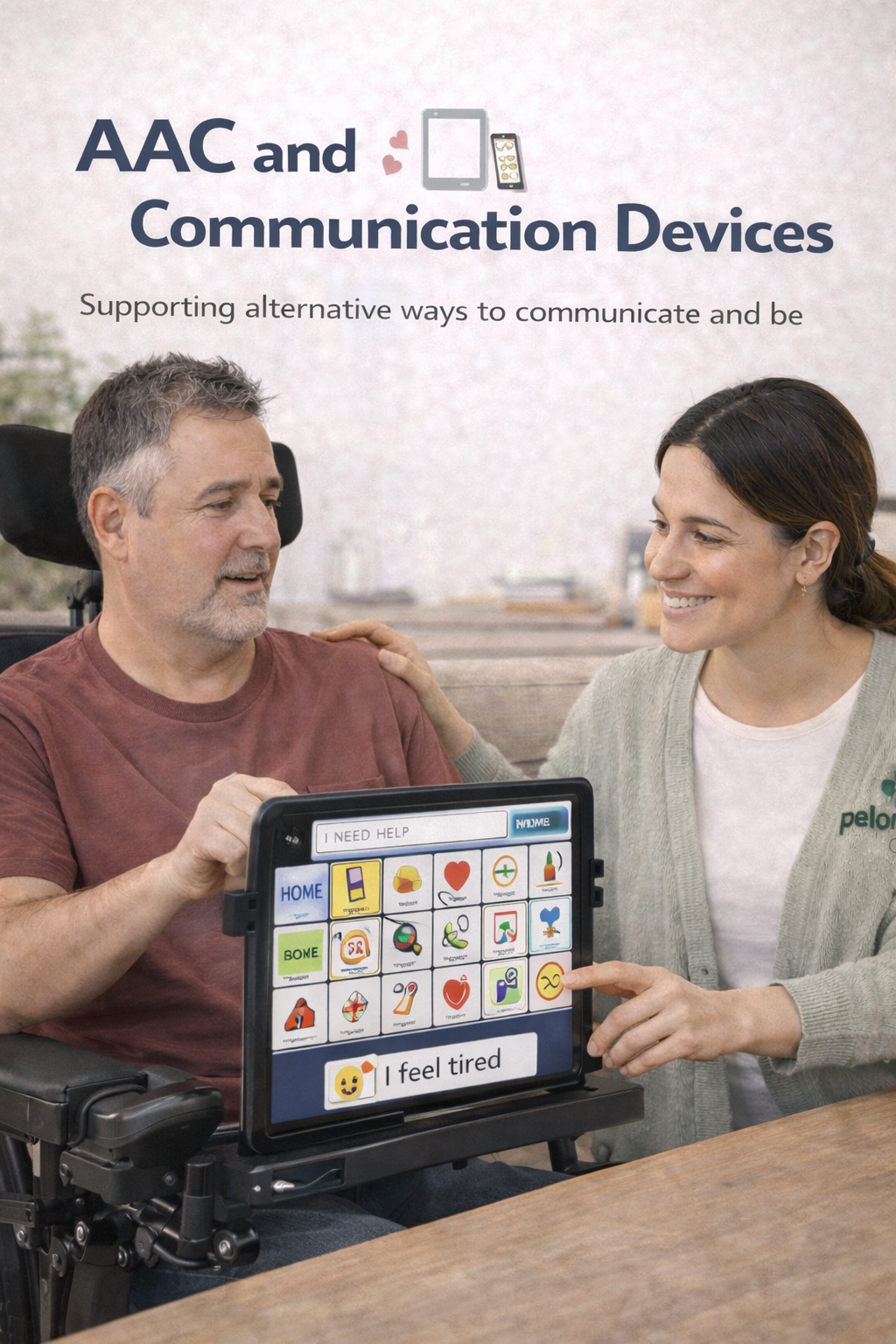
AAC and Communication Devices refer to a wide range of tools, systems, and strategies that support individuals to communicate more effectively. AAC can help people express their needs, share ideas, make choices, and participate in everyday interactions.
These may include:
- Speech generating devices
- Communication apps on tablets or iPads
- Picture based systems
- Low-tech options such as communication boards or books
AAC can be used in different ways depending on the individual:
- Alongside speech to support and enhance communication
- Or as a primary way to communicate when speech is not the most effective option
AAC is not a last resort. It is a valid and empowering way to support communication, and can be tailored to suit each person’s strengths, preferences, and goals.
Who Can Benefit from AAC?
AAC can support individuals with a range of communication needs through AAC and Communication Devices.
This includes people with:
- Autism
- Cerebral palsy
- Intellectual disability
- Motor neurone disease
- Stroke or brain injury
- Progressive neurological conditions
AAC is not a last resort. It is a valid and effective way to support communication at any stage.
How Speech Therapy Helps
Speech therapy plays an important role in identifying, trialling, and implementing AAC and Communication Devices systems.
We support individuals throughout the entire process, from assessment to everyday use, ensuring the right solution is selected, personalised, and successfully integrated into daily communication.
We support individuals to:
- Identify the most suitable communication system
- Trial different AAC options
- Learn how to use devices effectively
- Express needs, preferences, and ideas
- Participate in everyday activities and decision making
Our Approach
Our AAC approach is neuro-affirming, flexible, and centred on choice.
This means:
- No pressure to replace speech
- Supporting multiple ways to communicate
- Respecting autonomy and preferences
- Working collaboratively with families and support teams
With AAC and communication devices, our focus is on providing practical, personalised solutions that truly fit each individual’s needs and everyday environments.
Our goal is to ensure every individual has access to communication that is reliable, meaningful, and empowering.