Supporting meaningful interactions in ways that feel natural, comfortable, and authentic
Every child communicates and connects with others in their own unique way.
Some children may experience differences in how they engage in conversations, build relationships, or navigate social situations. This might include finding it harder to start conversations, understand others’ perspectives, or feel comfortable in group settings.
At Pelorus OT, we take a neuro-affirming approach, focusing on supporting each child to build connection, confidence, and participation, without trying to change who they are.
We support individuals in developing pragmatic language skills, using social scripts, and building confident peer interaction. Our approach includes tailored strategies for those with Autism Spectrum Disorder (ASD), helping them navigate social communication in ways that feel natural, comfortable, and meaningful.
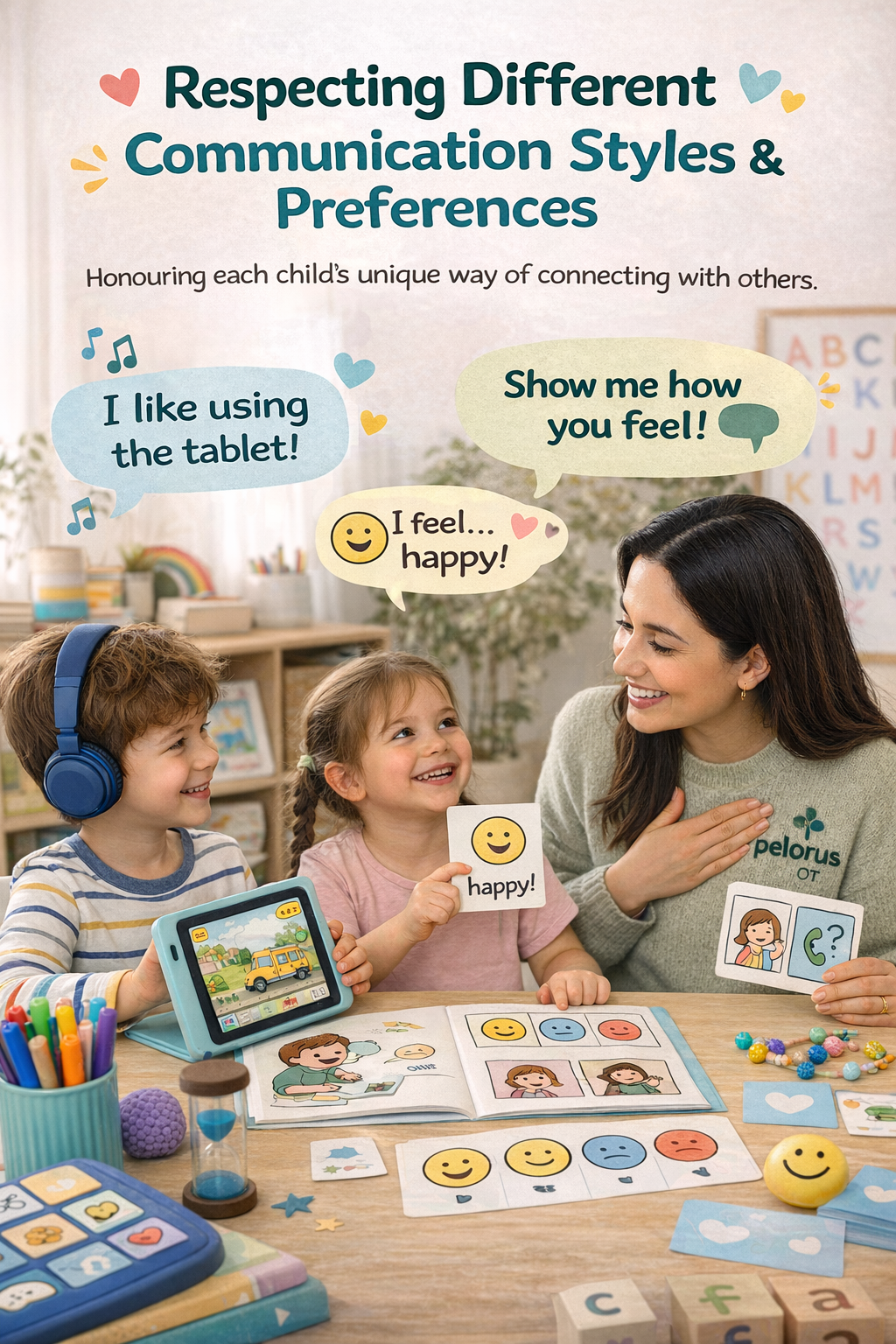
What is Communication, Connection & Social Interaction?
Communication is not just about words. It’s about how we connect with others, share experiences, and build relationships.
This area includes how children:
- Engage in back-and-forth interactions
- Express thoughts, ideas, and emotions
- Understand others’ communication styles
- Participate in shared activities and conversations
- Navigate different social environments (home, school, community)
In clinical terms, these skills are often referred to as social communication or pragmatic language.
Children may communicate in different ways, and these differences are a natural part of human diversity. Our goal is to support children in understanding and navigating social interactions in ways that align with their preferences and needs.
Signs Your Child May Need Support
Children have different communication styles, preferences, and ways of connecting with others. These differences are a natural part of neurodiversity.
Some children may benefit from support when social situations feel confusing, overwhelming, or require skills that don’t yet feel intuitive for them. This support is not about changing how your child communicates, but about helping them navigate environments and interactions in ways that feel more comfortable and accessible.
You might notice your child wanting to connect with others, but finding certain aspects of interaction more effortful, unpredictable, or tiring.
Your child may:
- Prefer communicating in their own way or at their own pace
- Find back-and-forth conversations more effortful
- Feel unsure in unfamiliar or group social situations
- Experience difficulty interpreting others’ tone, body language, or intent
- Find it easier to express ideas in some contexts than others
- Feel overwhelmed or fatigued after social interactions
- Want connection, but need support with communication to engage in ways that feel right for them.
These experiences don’t mean something is “wrong”. They simply highlight where the right support can make communication and connection feel more achievable.
How Speech Therapy Helps
At Pelorus OT, our Speech Pathologists support children to build communication skills in ways that honour their individuality, preferences, and identity.
We use a strengths-based, neuro-affirming approach, recognising that there is no single “right” way to communicate. Instead of changing a child’s natural communication style, we focus on expanding their skills, options, and confidence so they can engage in ways that work best for them.
We support children to:
- Build connections in ways that feel meaningful and comfortable
- Develop flexible communication strategies for different situations
- Express thoughts, ideas, and emotions in ways that suit them
- Understand and navigate a range of communication styles
- Increase confidence when engaging with others and in group settings
We also work with families and environments (home, school, community) to ensure expectations are supportive and inclusive—not just placed on the child.
We do not focus on forcing eye contact, masking behaviours, or changing a child’s personality.
Instead, we support children to participate, connect, and communicate, while remaining authentically themselves.
Why This Area Matters
Communication and connection are central to how children experience relationships, learning, and everyday life.
When children feel understood and supported in how they communicate, they are more likely to engage confidently and meaningfully with the world around them.
These skills support:
- Building and maintaining relationships
- Participating in group activities and learning environments
- Expressing needs, ideas, and emotions
- Developing confidence in social situations
- Supporting emotional wellbeing and a sense of belonging
Supporting this area early can help children build skills that enhance their participation and connection—on their own terms.