Supporting safe, comfortable eating and drinking
Eating and drinking are essential parts of daily life. They support nutrition, health, independence, and social connection, and a professional swallowing assessment can help ensure these activities remain safe and comfortable.
Some adults may experience changes in how they swallow, which can make mealtimes feel effortful, uncomfortable, or less enjoyable. These changes can occur due to medical conditions, neurological changes, or after events such as a stroke or brain injury.
At Pelorus OT, our Swallowing Assessments focus on understanding how a person eats and drinks, and identifying ways to support safety, comfort, and quality of life.
What is a Swallowing Assessment?
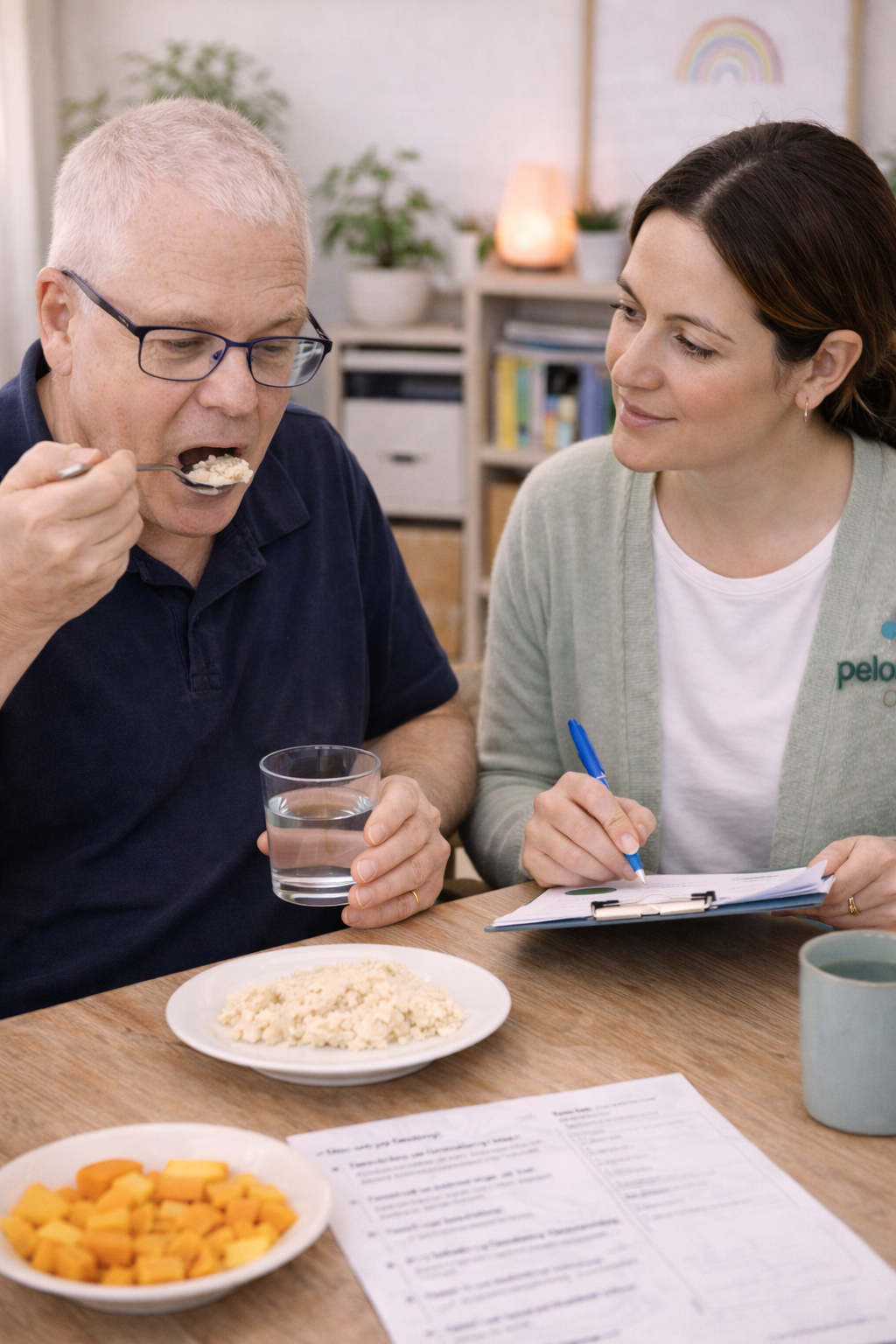
A Swallowing Assessment is a clinical evaluation of how food and fluids are managed during eating and drinking.
Swallowing difficulties are clinically known as dysphagia. These can affect how safely and efficiently food and fluids move from the mouth to the stomach.
The assessment helps us understand what is happening during swallowing and what supports may be helpful.
This may include:
- Observing eating and drinking in real time
- Assessing oral motor skills involved in swallowing
- Identifying signs of difficulty or discomfort
- Understanding how different food and fluid textures are managed
Where appropriate, we provide recommendations aligned with IDDSI guidelines for food and fluid consistency.
When might a Swallowing Assessment be helpful?
Some adults may benefit from a Swallowing Assessment when eating or drinking feels different, more effortful, or less safe than usual.
This may include:
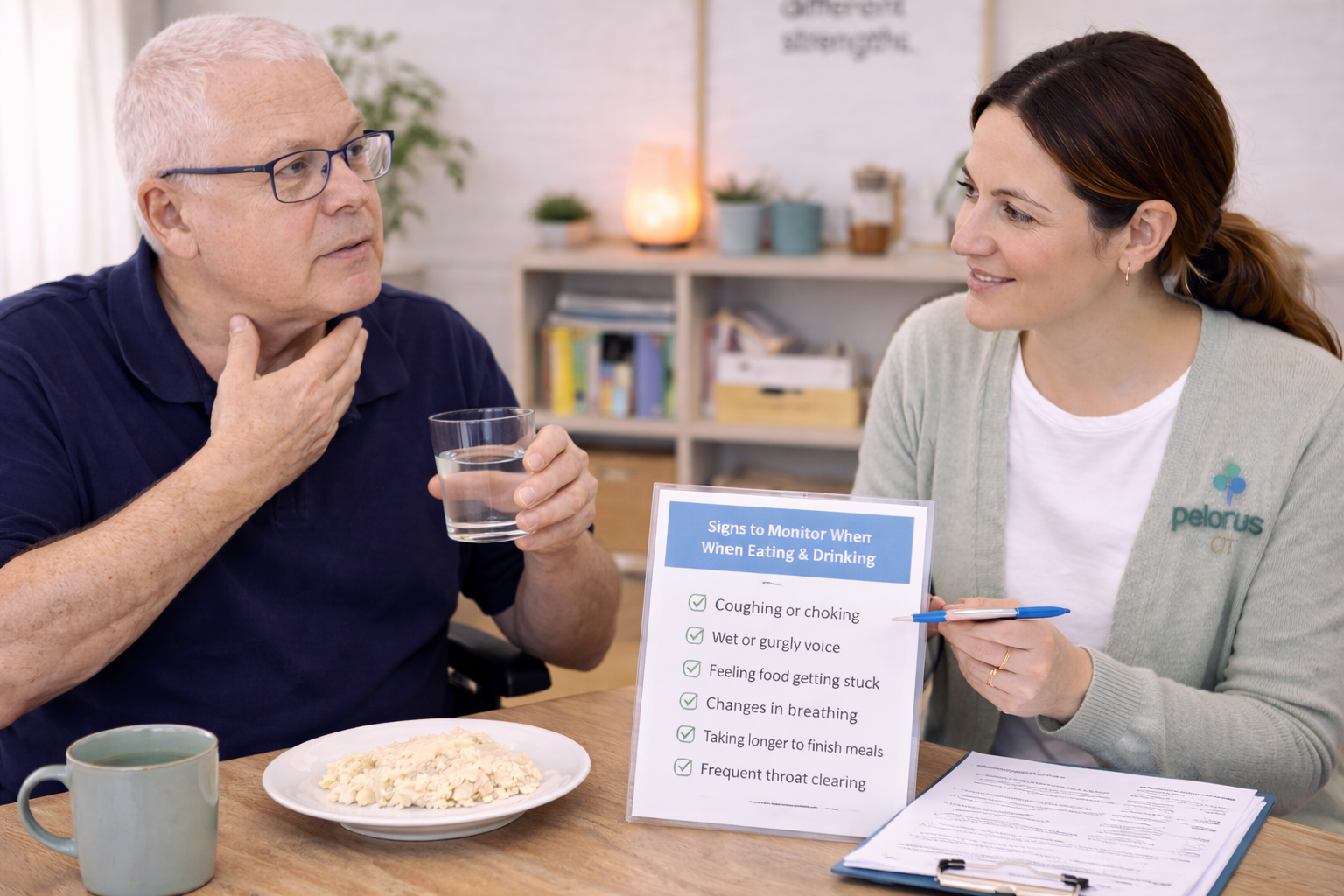
- Coughing or choking during meals
- Feeling like food is stuck in the throat
- Taking longer to finish meals
- Avoiding certain foods or textures
- Changes in voice quality after eating or drinking
- Frequent chest infections
- Unexplained weight loss or reduced appetite
These experiences can vary and may change over time. An assessment helps provide clarity and guidance on next steps.
What does the assessment involve?
We take a practical and person-centred approach to understanding swallowing in everyday contexts.
The assessment may include:
- Discussion of medical history and current concerns
- Observation of eating and drinking
- Assessment of posture and positioning during meals
- Exploration of different textures and consistencies
- Collaboration with family members, carers, or support staff
We aim to create a comfortable and respectful environment, ensuring the individual feels at ease throughout the process.
How a Swallowing Assessment Helps
A Swallowing Assessment provides guidance on how to make eating and drinking safer and more comfortable, while maintaining independence and enjoyment.
The assessment can help to:
- Identify swallowing strengths and areas of difficulty
- Reduce the risk of choking or aspiration
- Support adequate nutrition and hydration
- Provide practical mealtime strategies
- Improve confidence during eating and drinking
What you will receive
Following the assessment, you will receive clear and practical recommendations that can be applied in everyday life.
You will receive:
- A detailed swallowing assessment report
- Recommendations for food and fluid textures (if required)
- Mealtime strategies to support safety and comfort
- Guidance for family members, carers, or support staff
Our Approach
At Pelorus OT, our approach to swallowing support is respectful, person-centred, and focused on quality of life.
We understand that food is not just about nutrition—it is also about enjoyment, culture, and social connection.
Our approach focuses on:
- Supporting safety without unnecessary restriction
- Respecting personal preferences and routines
- Maintaining dignity and independence
- Working collaboratively with families and care teams
Our goal is to support individuals to continue enjoying meals in ways that feel safe, comfortable, and meaningful.