Receptive & Expressive Language Support
If your child is not talking as expected, has trouble following instructions, or struggles to express their thoughts, they may need support with language development.
What is Language Development?
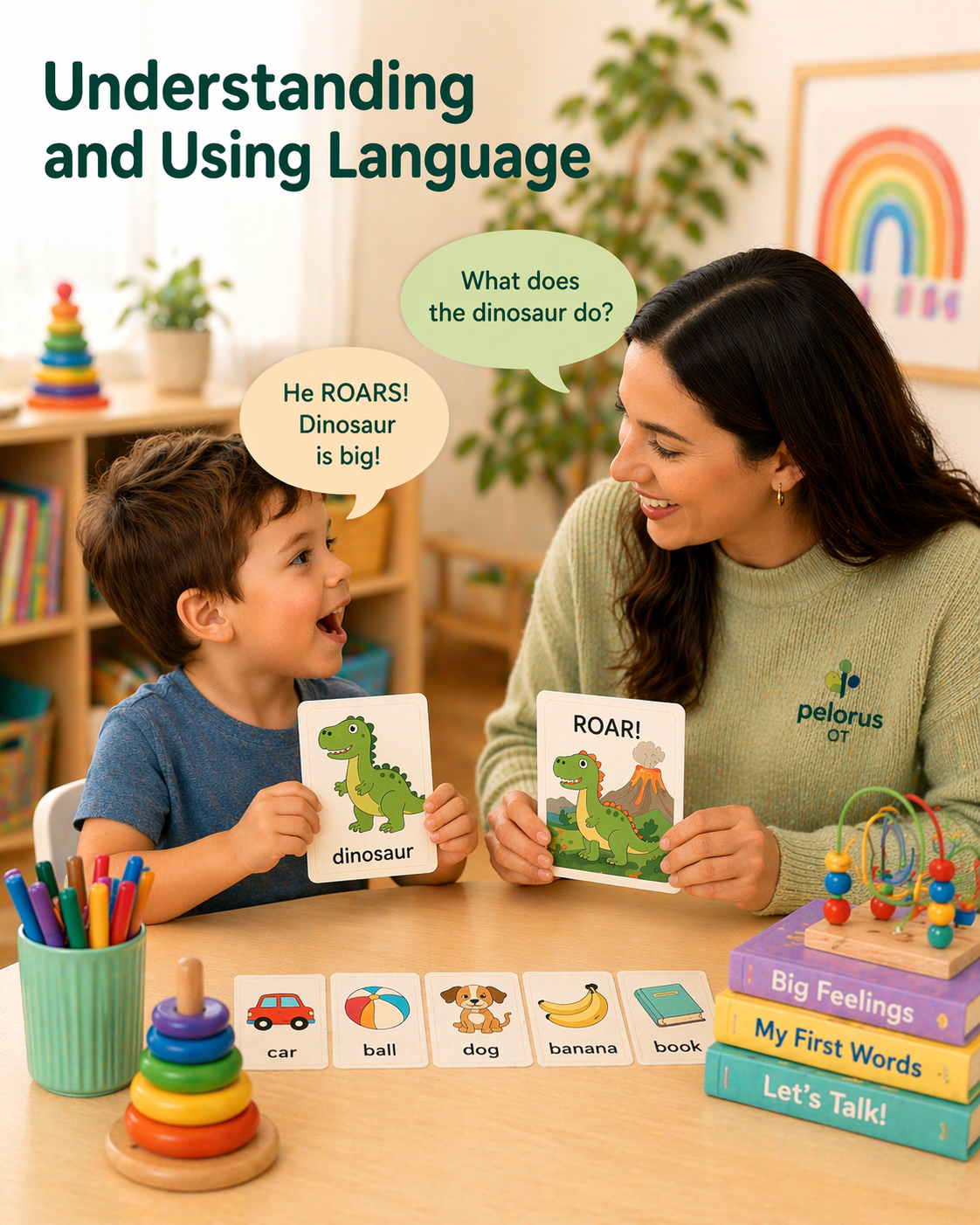
Language development refers to how children learn to understand and use words to communicate with others. It is a foundational skill that supports how children interact with people, make sense of the world around them, and express their thoughts, needs, and feelings.
Language is made up of two key areas:
- Receptive language – understanding words, instructions, and meaning (e.g. following directions, understanding questions)
- Expressive language – using words, sentences, and ideas to communicate (e.g. asking for help, telling stories, sharing thoughts)
Children develop language skills at different rates, and this can vary based on their environment, experiences, and individual differences. However, if a child is consistently finding it difficult to understand or use language, additional support can help them build these essential skills.
Signs Your Child May Need Support
Some children may find it challenging to understand what others are saying or to express themselves clearly. These difficulties can become more noticeable as they grow and are expected to follow instructions, answer questions, and communicate more independently.
You might notice your child becoming frustrated when they are not understood, or withdrawing from conversations and group activities. In some cases, children may rely more on gestures, pointing, or behaviour to communicate their needs.
Common signs include:
- Limited vocabulary for their age
- Not combining words into phrases or sentences
- Difficulty following simple or multi-step instructions
- Trouble answering questions or responding appropriately
- Using gestures more than words to communicate
- Difficulty telling stories or explaining ideas
How Speech Therapy Helps
Speech therapy provides structured, supportive opportunities for children to build their language skills in a way that feels natural and engaging.
Our Speech Pathologists use evidence-based approaches to help children develop both their understanding and use of language. Sessions are designed to be interactive and meaningful, often incorporating play, everyday routines, and activities that motivate your child.
We support children to:
- Understand instructions, concepts, and everyday language while supporting overall language development
- Build vocabulary and expand sentence structure
- Express thoughts, needs, and feelings more clearly through improved language development
- Improve their ability to answer questions and engage in conversations
- Develop confidence in communicating across different environments with ongoing language development
Therapy is always individualised to your child’s strengths, interests, and goals. We also work closely with families, providing practical strategies and guidance so you can support your child’s communication at home and in daily routines.
Why Language Skills Matter
Language skills are essential for a child’s overall development and play a key role in how they learn, connect with others, and manage everyday situations.
When children are able to understand and express themselves effectively, they are more likely to feel confident, engaged, and independent. Strong language skills also support emotional wellbeing, as children can better communicate their feelings and needs.
Strong language skills support:
- Learning and participation at school, including following instructions and understanding new concepts
- Building friendships and engaging in social interaction
- Emotional regulation and expressing feelings appropriately
- Confidence in communicating in different environments
- Independence in daily routines and activities
Supporting language development early can make a meaningful difference, helping children build strong foundations for communication, learning, and relationships as they grow.