
Sensory Diet Guide for Parents and Teachers: What It Is, How It Helps, and Free Downloadable Sensory Diet Resources
Every person experiences the world through their senses. The brain constantly processes information from movement, touch, sound, light, body awareness, and the environment around us. For many people, this happens automatically and comfortably. For others, sensory input can sometimes feel overwhelming, distracting, or difficult to regulate.
One strategy Occupational Therapists often use to support sensory regulation is called a sensory diet.
A sensory diet is a personalised plan of sensory activities designed to support an individual’s regulation throughout the day, often incorporating short sensory breaks (more so for kids) to help maintain focus and emotional balance.
In this article we explain what a sensory diet is, who it can support, how it may be helpful, and how families, educators, and support teams can use sensory strategies in daily routines.
Table of Contents
What Is a Sensory Diet?
A sensory diet is a carefully planned set of sensory activities that are integrated into a person’s daily routine to support their nervous system.
The term “diet” simply refers to the idea that just as our bodies benefit from regular meals throughout the day, our sensory systems can benefit from regular opportunities to receive helpful sensory input.
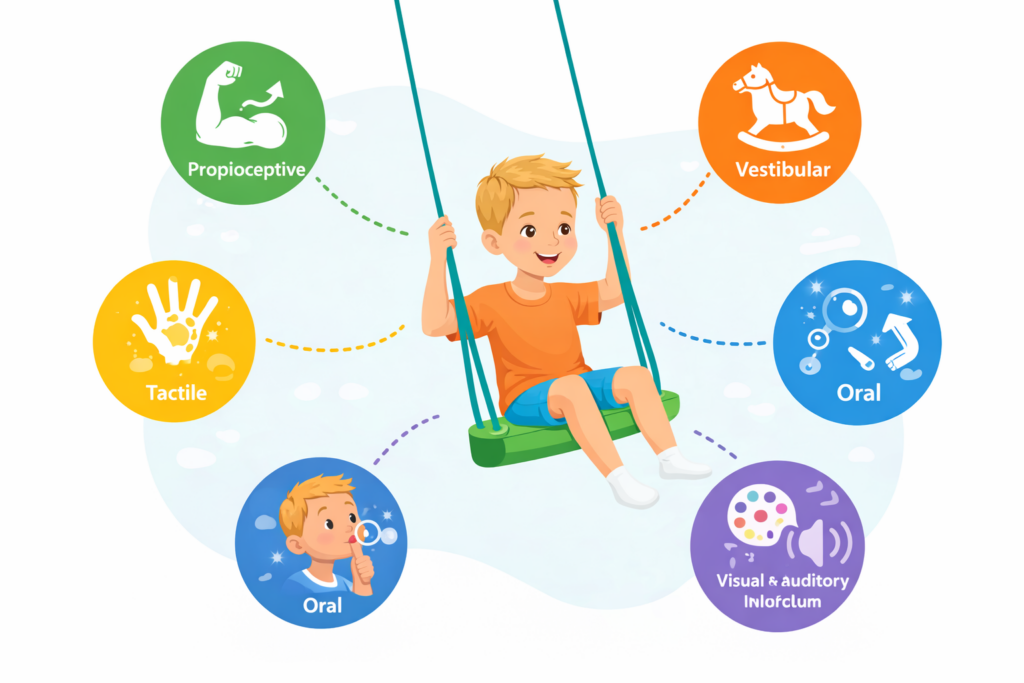
These activities are chosen to support regulation across different sensory systems, such as:
- Proprioceptive input – information from muscles and joints that supports body awareness. Activities that involve pushing, pulling, lifting, or carrying objects are often called heavy work activities and can help support regulation and body awareness.
- Vestibular input – movement and balance
- Tactile input – touch and textures
- Oral input – chewing, sucking, or blowing activities
- Visual and auditory input – environmental sensory information
A sensory diet is always individualised. Activities that feel calming or organising for one person may feel overwhelming or uncomfortable for another. For this reason, Occupational Therapists work collaboratively with individuals, families, and educators to identify sensory strategies that best support each person’s needs and preferences. The aim is not to change who someone is, but rather to support their ability to feel comfortable, regulated, and able to participate in everyday activities.
Who Can Benefit from a Sensory Diet?
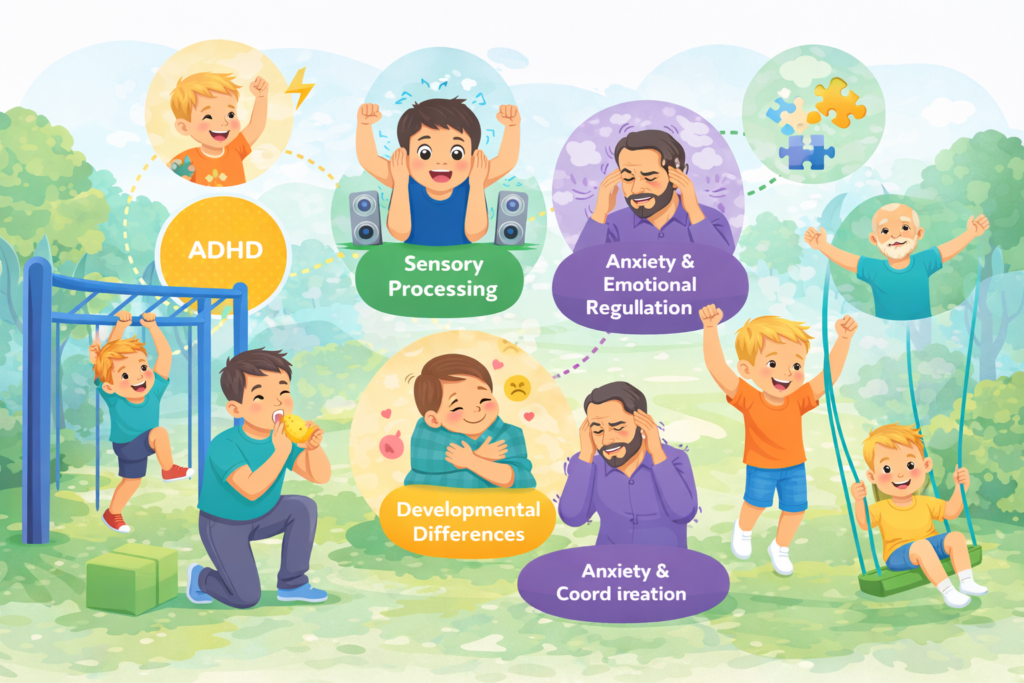
Sensory diets are commonly used to support individuals who experience sensory processing differences.
This may include people who are:
- Autistic
- Living with ADHD
- Experiencing sensory processing differences
- Living with developmental differences
- Experiencing anxiety or challenges with emotional regulation
- Navigating motor planning or coordination differences
However, sensory strategies can be helpful for many individuals, including children and adults who simply benefit from movement breaks, calming input, or structured sensory routines.
People may benefit from sensory supports if they:
- Seek frequent movement or physical activity
- Prefer deep pressure or “heavy work” activities
- Find certain environments overwhelming or overstimulating
- Avoid particular textures, clothing, or sensory experiences
- Seek chewing or oral input
- Find it difficult to stay focused during long tasks
These behaviours are often meaningful ways individuals communicate their sensory needs. A sensory diet helps provide safe, supportive opportunities to meet those needs.
How Does a Sensory Diet Help?
Sensory input has a direct influence on the nervous system. The type, timing, and intensity of sensory experiences can affect attention, emotional regulation, comfort, and participation in daily activities.
A sensory diet helps by offering structured opportunities for the nervous system to receive helpful input throughout the day.
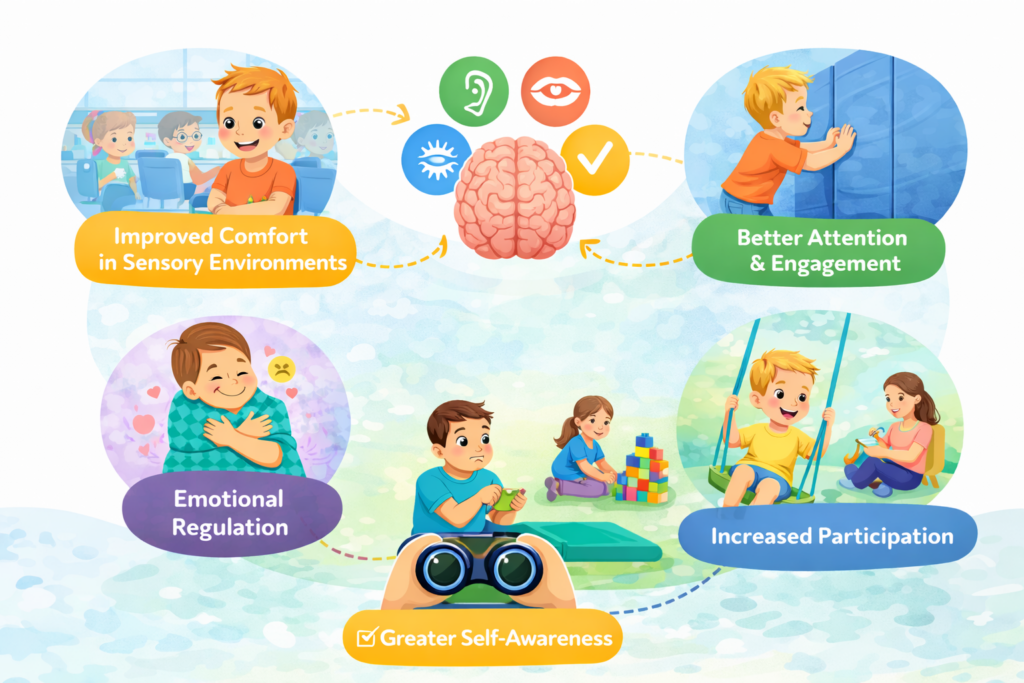
When implemented consistently and collaboratively, sensory strategies may support:
Improved Comfort in Sensory Environments
Some environments can be busy or unpredictable. Sensory strategies can help individuals feel more comfortable and prepared to engage in these settings.
Better Attention and Engagement
Certain types of sensory input, particularly proprioceptive “heavy work” activities, can help support body awareness and readiness for learning or task participation.
Emotional Regulation
Sensory strategies can provide ways for individuals to regulate their energy levels and emotional states.
Increased Participation
When individuals feel more regulated and comfortable in their bodies, it often becomes easier to participate in learning, play, social activities, and everyday routines.
Greater Self-Awareness
Over time, individuals may become more aware of the types of sensory input that help them feel calm, focused, or energised.
This can support the development of self-regulation skills and independence.
How to Use a Sensory Diet?
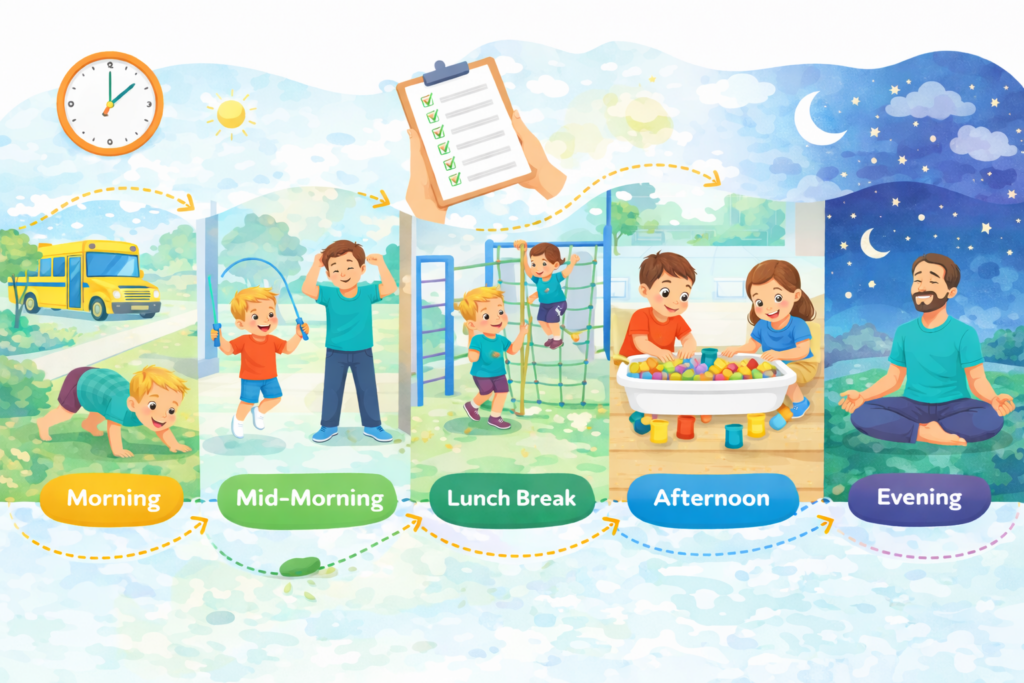
Sensory diets work best when sensory activities are incorporated naturally into daily routines rather than used only when someone is already overwhelmed. A sensory diet often includes a variety of movement and proprioceptive activities throughout the day. These may include climbing, carrying objects, or other heavy work activities for kids that provide deep pressure through the muscles and joints.
Occupational Therapists often help families identify key moments in the day where sensory strategies may be helpful. These may include:
- Before school or structured activities
- Between learning tasks
- After school or therapy sessions
- During transitions
- Before bedtime
Sensory input is provided at different times of the day, with short sensory breaks used between activities to help the individual reset, refocus, and stay engaged.
For example, a daily sensory routine might include:
- Morning – animal walks or wall push-ups before leaving for school
- Mid-morning – movement break or stretching
- Lunch break – playground climbing or active play
- Afternoon – tactile play such as playdough or sensory bins
- Evening – calming activities such as deep pressure or breathing exercises
The goal is to provide the nervous system with predictable opportunities for regulation throughout the day.
What Should Parents and Caregivers Observe?
Observing how sensory strategies affect an individual can provide valuable insights.
Families and educators may notice patterns related to:
- Which activities the person enjoys or seeks out
- Which activities appear calming or organising
- Situations that feel overwhelming or overstimulating
- Times of day when regulation and participation feels more difficult
- Changes in mood, attention, or energy levels after sensory activities
- Sensory experiences that the individual prefers to avoid
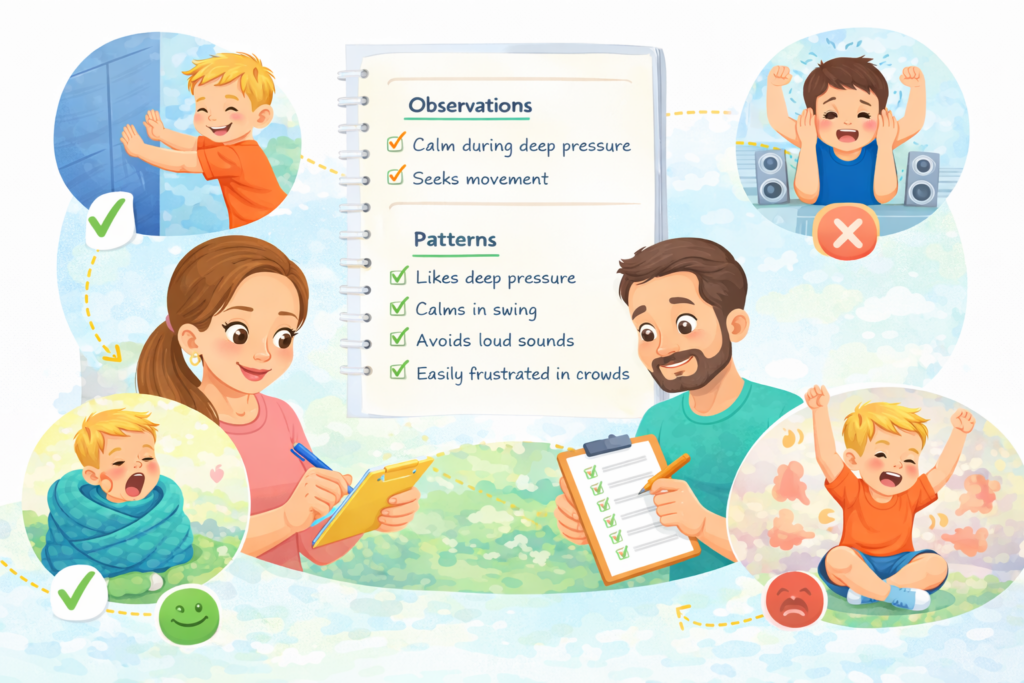
Keeping brief notes or using a simple checklist can help identify patterns over time.
This information can be very helpful when working collaboratively with an Occupational Therapist.
What Information Should Be Shared With Your Occupational Therapist?
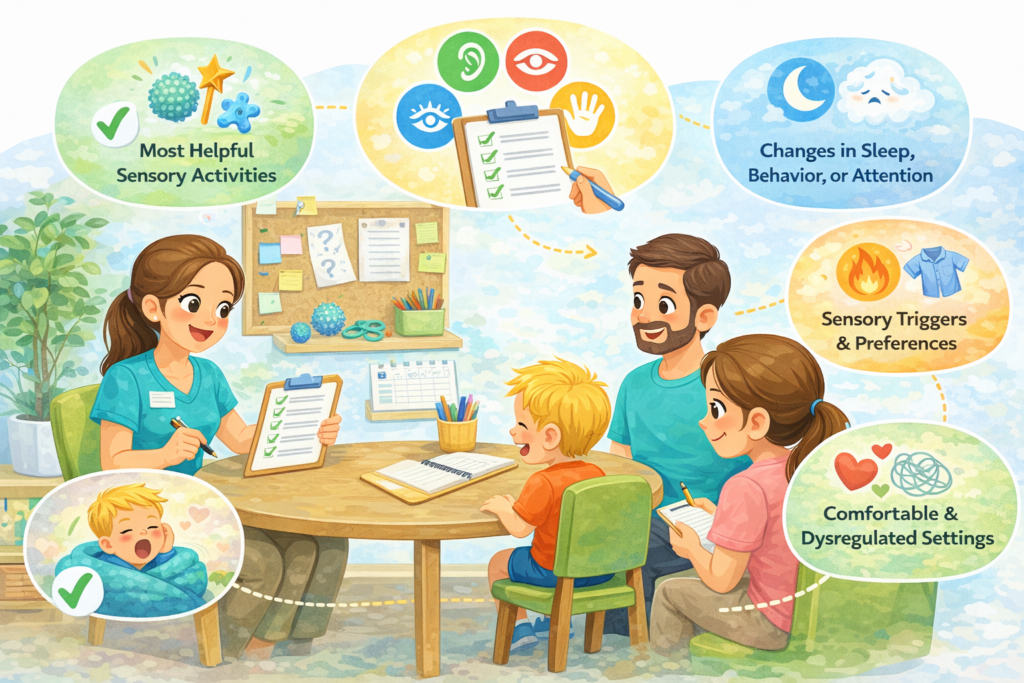
Occupational Therapists rely on feedback from families and support teams to ensure that sensory strategies remain helpful and relevant.
When sharing observations with your therapist, it may be helpful to discuss:
- Which sensory activities seem most helpful
- Which activities are difficult to implement consistently
- Any changes in sleep, behaviour, or attention
- Sensory triggers that have been noticed
- Activities the individual actively seeks or avoids
- Situations where the person feels particularly comfortable or dysregulated
Sensory needs can change over time, so sensory diets are often reviewed and adjusted as the individual grows and their routines evolve.
Free Download: Sensory Diet Booklet
To support families and educators in implementing sensory strategies, we have created a free Sensory Diet Booklet.
The booklet includes:
- An overview of sensory regulation
- A list of sensory activity ideas
- Daily sensory planning pages
- Tracking checklists for parents and teachers
- Space to record observations for your Occupational Therapist
You can download the booklet here: [Update 13 March 2026: The ebook is being updated and will be released shortly]
Download the Free Sensory Diet Booklet
Please note that sensory strategies are most effective when individualised. The ideas provided in the booklet are general examples and may not suit every individual.
How Pelorus OT Can Help!
At Pelorus OT, our Occupational Therapists support children, adolescents, and adults to participate in everyday activities in ways that feel comfortable, meaningful, and achievable.
Our therapists work collaboratively with individuals, families, educators, and support teams to support areas such as:
- Sensory processing and sensory regulation
- Emotional regulation and coping strategies
- Functional skill development
- School participation and classroom strategies
- Self-care and daily living skills
- Community participation and independence
Our approach is person-centred, collaborative, and neuroaffirming, recognising and respecting each individual’s unique strengths, preferences, and ways of experiencing the world.
Get Support from Pelorus OT
If you would like support understanding sensory needs or developing personalised sensory strategies, our Occupational Therapists are here to help. Contact Us to discuss further or submit a referral using the button below:
Pelorus OT currently provides services across Melbourne and Adelaide, supporting individuals and families to build confidence, independence, and meaningful participation in everyday life.
Related Resources
You may also find these guides helpful: