
25 Sensory Activities for Kids That Support Regulation and Learning
Children learn about the world through their senses. Touch, movement, sound, body awareness, and visual input all play an important role in how children explore their environment and participate in everyday activities.
For many children, engaging in sensory activities for kids can support comfort, attention, emotional regulation, and participation in play and learning.
Sensory activities provide opportunities for children to explore different types of sensory input in playful and meaningful ways. These experiences can help children better understand their bodies, regulate their energy levels, and engage with the world around them.
In this guide, we explore what sensory activities are, how they support children, how they relate to a sensory diet, and provide 25 practical sensory activity ideas for home and school.
Table of Contents
What Are Sensory Activities?
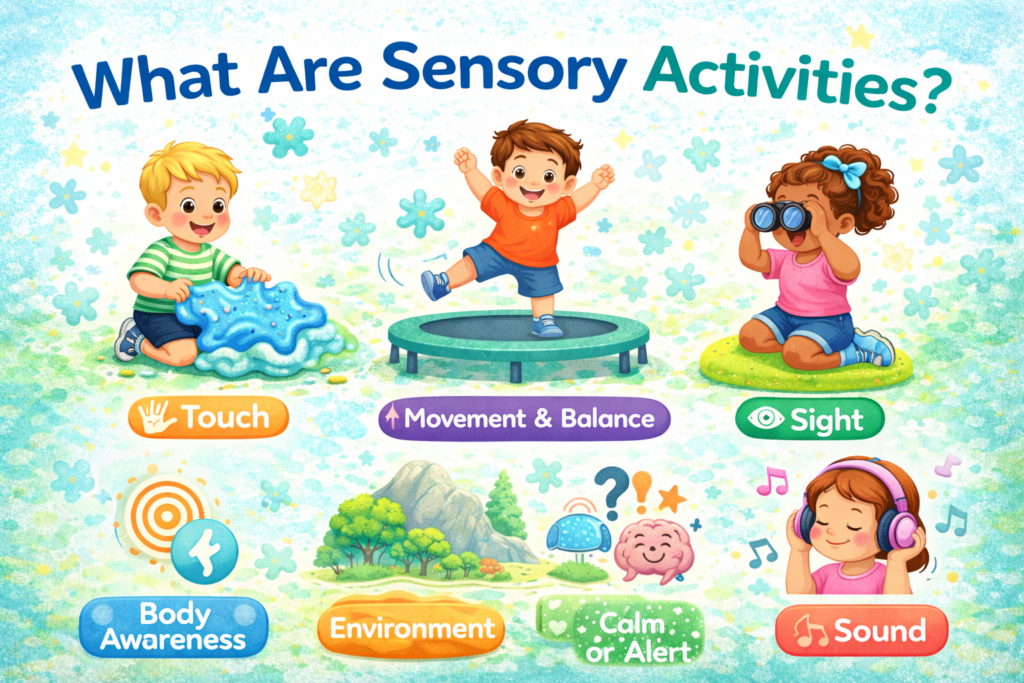
Sensory activities are experiences that engage one or more of the body’s sensory systems. These systems help the brain interpret information from the environment and from within the body so that children can respond appropriately to different situations.
Sensory input helps the nervous system understand:
- where the body is in space
- how the body is moving
- what is happening in the environment
- whether the body needs to become calmer or more alert
When children receive helpful sensory input throughout the day, it can support regulation, focus, coordination, and participation in everyday activities.
Several key sensory systems are commonly involved in sensory activities.
Understanding the Sensory Systems
Tactile Input (Touch)
The tactile system processes information received through the skin. It helps the brain understand textures, temperature, pressure, and physical contact with objects and surfaces.
Children experience tactile input when they touch materials such as sand, water, playdough, slime, foam, or textured objects.
Tactile sensory play supports exploration and curiosity. It can also help children become more comfortable interacting with different textures and materials in everyday environments.
These activities often support:
- fine motor skills
- curiosity and exploration
- tolerance for different textures
- creative play
Vestibular Input (Movement and Balance)
The vestibular system, located in the inner ear, helps the brain interpret movement and balance.
Activities such as swinging, spinning, jumping, or climbing stimulate this system and help children understand how their bodies move through space.
Movement-based sensory activities can support:
- balance and coordination
- body awareness
- energy regulation
- readiness for learning
For some children, rhythmic movement can feel calming, while more energetic movement can help release excess energy.
Proprioceptive Input (Body Awareness)
The proprioceptive system provides information from muscles and joints about body position and effort.
Children receive proprioceptive input when they push, pull, lift, climb, or carry objects.
These movements are often called heavy work activities because they involve effort through the muscles and joints.
Many children experience proprioceptive input as organising and grounding, which can help support focus and emotional regulation.
You can explore more examples in our guide to heavy work activities for kids.
Visual and Auditory Input
Children also process sensory information through sight and sound.
The visual system interprets light, colours, patterns, and movement. Activities that involve colours, lights, or visual exploration can provide engaging sensory experiences.
The auditory system processes sound, rhythm, and environmental noise.
For some children, quieter environments or rhythmic sounds may feel calming, while loud or busy environments may feel overwhelming.
Creating balanced sensory environments can help children feel more comfortable and regulated.
How Sensory Activities Support Children
When incorporated into daily routines, sensory activities for kids can support several important areas of development. These activities provide opportunities for children to receive sensory input that helps the nervous system organise and interpret information from both the body and the surrounding environment.
Regular sensory experiences can support sensory regulation, helping children feel more comfortable, organised, and ready to participate in daily activities such as learning, play, and social interaction.
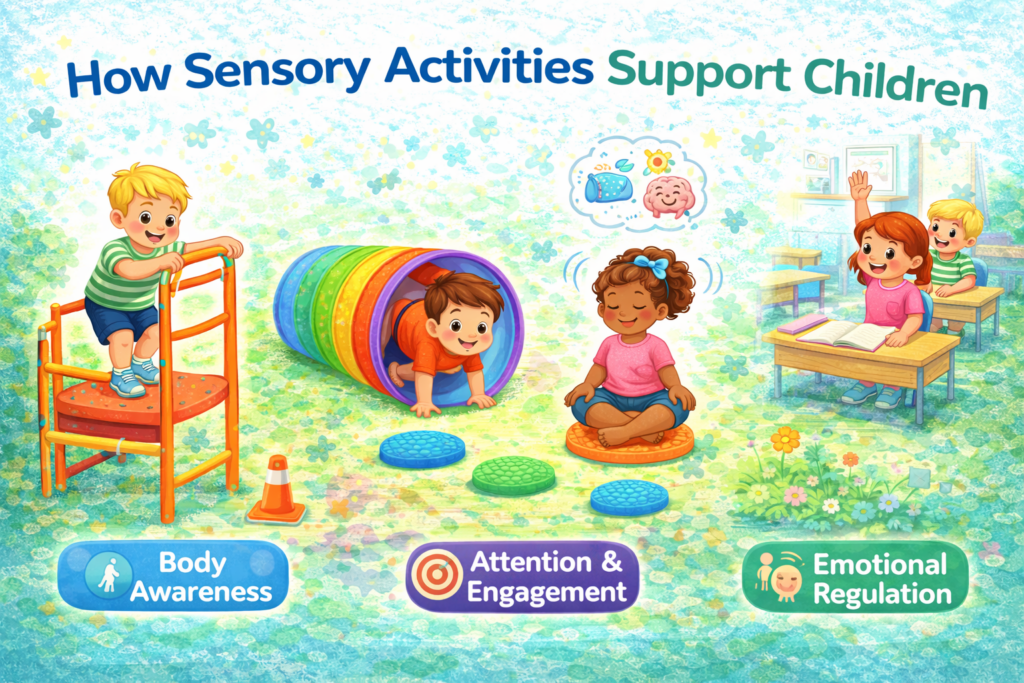
Body Awareness
Movement-based sensory activities and tactile experiences help children develop a stronger understanding of how their bodies move and interact with the environment. Activities such as climbing, pushing, jumping, crawling, and exploring different textures provide feedback from the muscles, joints, and skin.
This type of sensory input supports the development of body awareness, helping children understand where their bodies are in space and how much effort to use when performing different movements. Over time, this can support coordination, balance, motor planning, and confidence in physical play.
Attention and Engagement
Short sensory activities for kids, such as movement breaks or tactile play, can help children reset their attention and return to tasks with improved focus.
Some children benefit from opportunities to release excess energy through active movement, while others respond well to organising sensory input such as proprioceptive activities or heavy work movements. Incorporating sensory opportunities throughout the day can help children feel more prepared to engage in learning activities and structured routines.
Emotional Regulation
Sensory experiences can also play an important role in emotional regulation. Some sensory activities provide energising input, while others provide calming input that helps children settle their bodies.
For example, active movement activities may help children release built-up energy, while deep pressure or rhythmic sensory experiences may help the nervous system feel more organised and calm. Over time, children may begin to recognise which sensory activities help them feel comfortable, focused, or relaxed.
Participation in Daily Activities
When children feel comfortable and regulated in their bodies, it often becomes easier for them to participate in everyday routines. This may include participating in classroom learning, engaging in play with peers, completing tasks at home, or exploring new environments.
Providing regular opportunities for sensory activities throughout the day using short sensory breakshttps://pelorusot.com/2026/03/sensory-breaks-for-kids/ can support children to engage more confidently in learning, play, and social experiences.
Sensory Activities vs Heavy Work Activities
Many parents come across both terms and wonder if they mean the same thing.
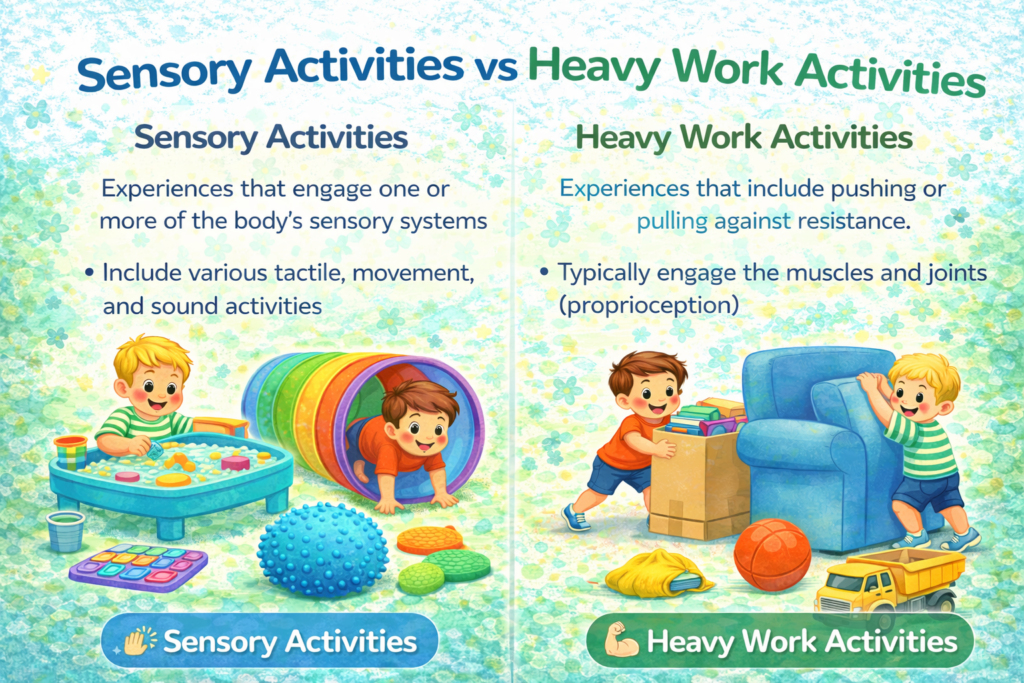
While they are related, heavy work activities are a specific type of sensory activity.
Sensory activities include a wide range of experiences that stimulate different sensory systems such as touch, movement, sound, and body awareness.
Heavy work activities specifically target the proprioceptive system and involve pushing, pulling, lifting, carrying, or applying pressure through the muscles and joints.
Examples include:
- carrying groceries
- pushing a laundry basket
- climbing playground equipment
- wall push-ups
These activities provide strong proprioceptive input and are often incorporated into sensory regulation strategies.
How Sensory Activities Fit Into a Sensory Diet
Sensory activities are often used as part of a sensory diet.
A sensory diet is a personalised set of sensory strategies recommended by an Occupational Therapist to support regulation throughout the day.
Rather than being a single activity, a sensory diet includes a combination of sensory experiences integrated into daily routines.
For example, a sensory routine might include:
- movement activities before school
- tactile play after school
- heavy work activities before homework
- calming sensory input before bedtime
The goal is to provide the nervous system with predictable opportunities for helpful sensory input throughout the day.
25 Sensory Activities for Kids
Below are simple and practical sensory activities for kids that can be used at home or school.
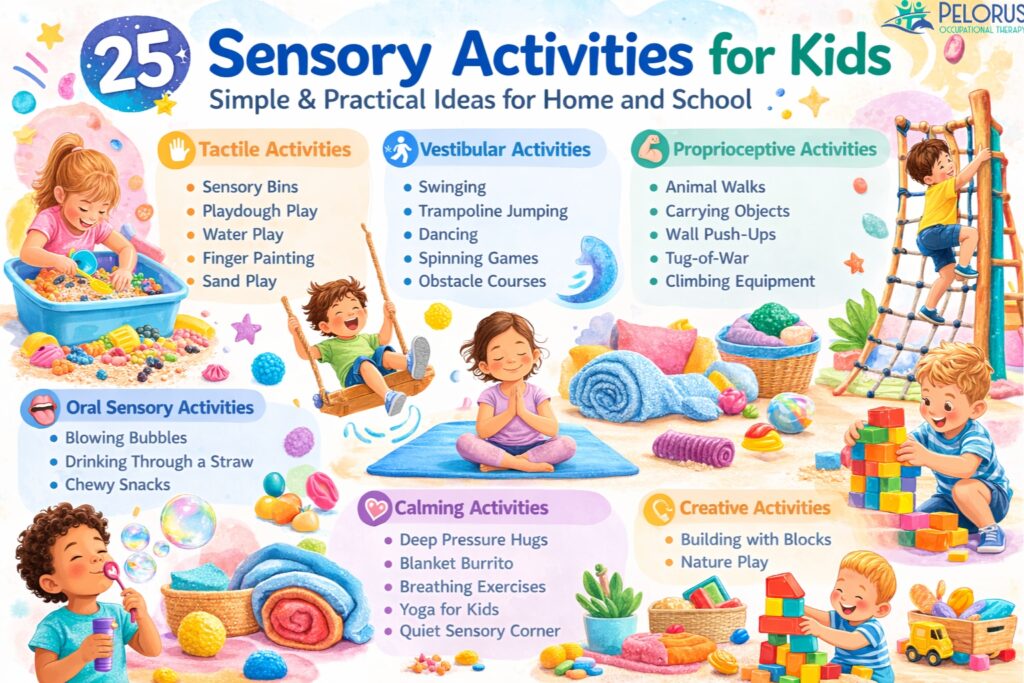
Tactile Sensory Activities
1. Sensory Bins
Fill a container with materials such as rice, beans, sand, or pasta. Children can scoop, pour, and search for hidden objects within the bin. This encourages tactile exploration and fine motor skills.
2. Playdough Play
Rolling, squeezing, and shaping playdough provides both tactile input and strengthening for the hands and fingers.
3. Water Play
Pouring, scooping, and splashing water provides calming tactile input while encouraging creativity and experimentation.
4. Finger Painting
Painting with fingers allows children to explore textures and colours while engaging in creative expression.
5. Sand Play
Digging, pouring, and building shapes in sand supports tactile exploration and imaginative play.
Vestibular Activities
6. Swinging
Swinging provides rhythmic movement that many children find calming and enjoyable.
7. Jumping on a Trampoline
Jumping provides strong vestibular and proprioceptive input and can help release excess energy.
8. Dancing
Music and dancing encourage coordination, rhythm, and full-body movement.
9. Spinning Games
Gentle spinning activities provide vestibular input and can be incorporated into playful games.
10. Obstacle Courses
Obstacle courses combine climbing, crawling, balancing, and jumping, providing a variety of sensory experiences.
Proprioceptive Activities
11. Animal Walks
Animal walks such as bear walks, crab walks, and frog jumps engage multiple muscle groups and provide strong body awareness input.
12. Carrying Objects
Helping carry books, toys, or groceries provides natural proprioceptive input through the arms and shoulders.
13. Wall Push-Ups
Children can push against a wall repeatedly to provide deep pressure through the arms.
14. Tug-of-War
Pulling against resistance during tug-of-war provides strong proprioceptive input and can be a fun social activity.
15. Climbing Playground Equipment
Climbing engages the whole body and strengthens coordination and body awareness.
Oral Sensory Activities
16. Blowing Bubbles
Blowing bubbles strengthens oral muscles and supports breath control.
17. Drinking Through a Straw
Using a straw requires controlled sucking and can provide oral sensory input.
18. Chewy Snacks
Foods such as bagels, dried fruit, or crunchy vegetables can provide oral input for some children.
Calming Sensory Activities
19. Deep Pressure Hugs
Gentle pressure through hugs or squeezes can feel calming and grounding.
20. Blanket Burrito
Wrapping in a blanket provides deep pressure and can create a sense of comfort.
21. Breathing Exercises
Slow breathing activities can help children relax and regulate their emotions.
22. Yoga for Kids
Simple yoga poses encourage stretching, balance, and body awareness.
23. Quiet Sensory Corner
A calm space with cushions, soft lighting, and favourite objects can help children reset when needed.
Creative Sensory Activities
24. Building with Blocks
Stacking, arranging, and constructing with blocks engages both tactile and visual sensory systems.
25. Nature Play
Exploring leaves, rocks, soil, and natural textures outdoors provides rich sensory experiences.
Encouraging Participation Through Positive Reinforcement
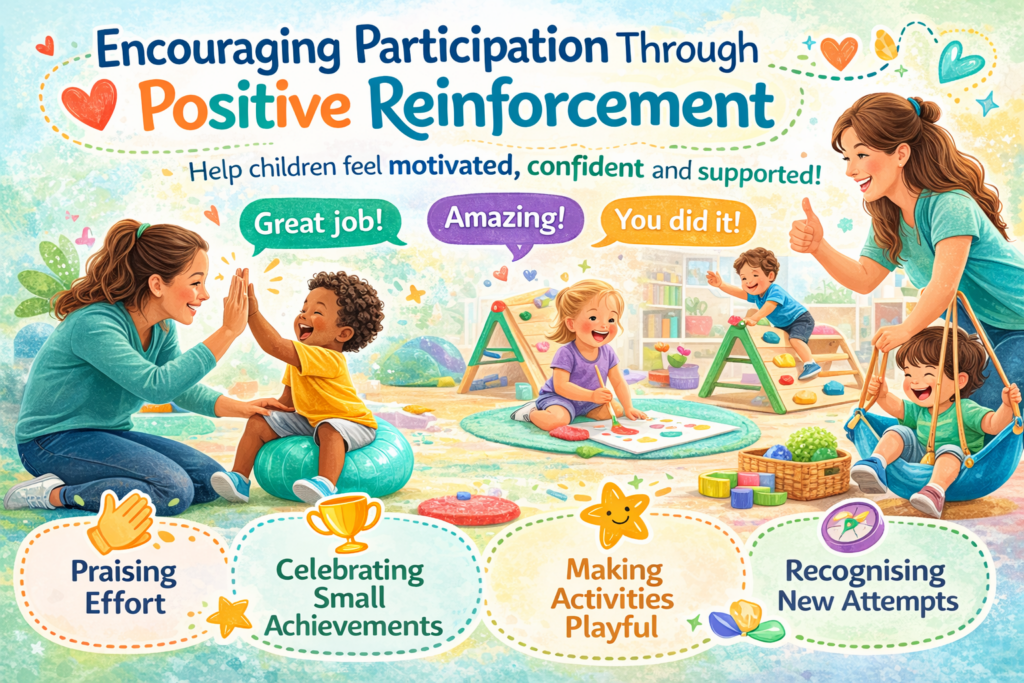
When introducing sensory activities, encouragement and positive reinforcement can help children feel motivated and confident.
Children often respond best when their efforts are acknowledged and appreciated.
For example:
- praising effort
- celebrating small achievements
- making activities playful
- recognising when children try new movements
Positive reinforcement helps create a supportive environment where children feel confident participating in activities that support their regulation and wellbeing.
How Pelorus OT Can Help
At Pelorus OT, our Occupational Therapists support children and families to build confidence and participation in everyday activities.
Our therapists work collaboratively with families to better understand each child’s unique sensory preferences and support needs. This may include:
• conducting sensory assessments
• identifying sensory preferences and triggers
• recommending practical sensory strategies for home and school
• developing personalised sensory diets that provide structured sensory input throughout the day
A sensory diet is a personalised plan of sensory activities that helps support regulation, attention, and participation in everyday routines. You can learn more in our guide on what a sensory diet is and how it supports children.
Our therapists may also recommend proprioceptive or heavy work activities, which involve pushing, pulling, lifting, or carrying movements that provide deep input through the muscles and joints. These activities can often help children feel more organised, grounded, and ready to participate in daily tasks. You can explore more examples in our guide to heavy work activities for kids.
Contact Us to discuss further or submit a referral using the button below:
Pelorus OT currently provides services across Melbourne and Adelaide.