15 Heavy Work Activities for Kids: Proprioceptive Activities That Support Regulation
Many children naturally seek movement during the day. They may enjoy climbing, pushing objects, jumping, or engaging in energetic play. For some children, these types of activities are especially helpful because they provide sensory input that helps their bodies feel organised and regulated.
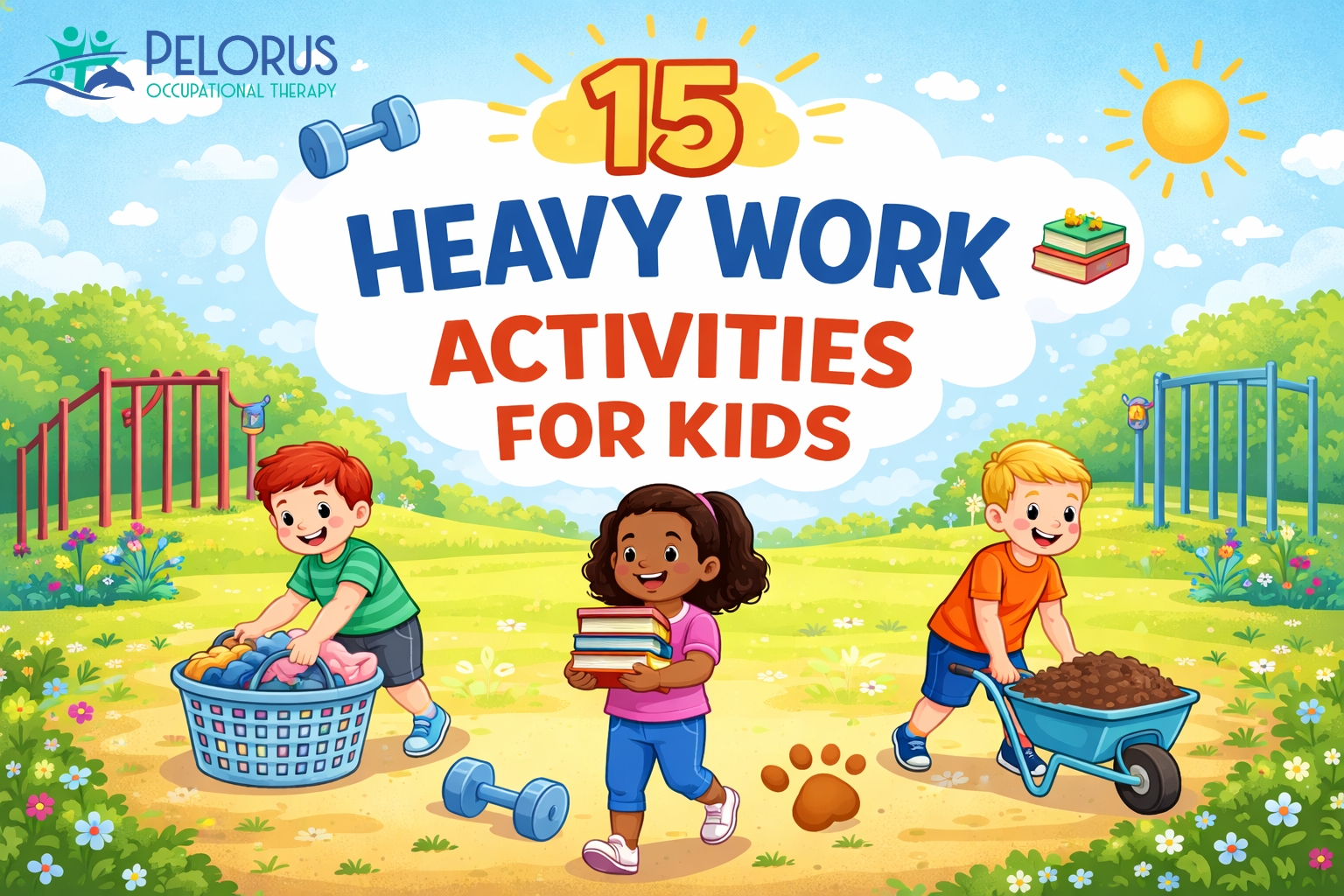
Occupational Therapists often refer to these types of movements as heavy work activities for kids.
Heavy work activities involve movements that place pressure through the muscles and joints. This type of input activates the proprioceptive system, which provides the brain with information about body position, movement, and effort.
These types of activities are often recommended as part of a broader sensory regulation approach, and they are commonly included in a sensory diet, which is a personalised set of sensory strategies designed to support regulation and participation throughout the day. For kids, this is often done by incorporating short sensory breaks for kids to help maintain focus and emotional balance.
For many children, proprioceptive activities for kids can support attention, emotional regulation, body awareness, and participation in everyday activities.
In this article, we explore what heavy work activities are, why proprioceptive input supports regulation, and practical heavy work activity ideas that families and educators can incorporate into everyday routines.