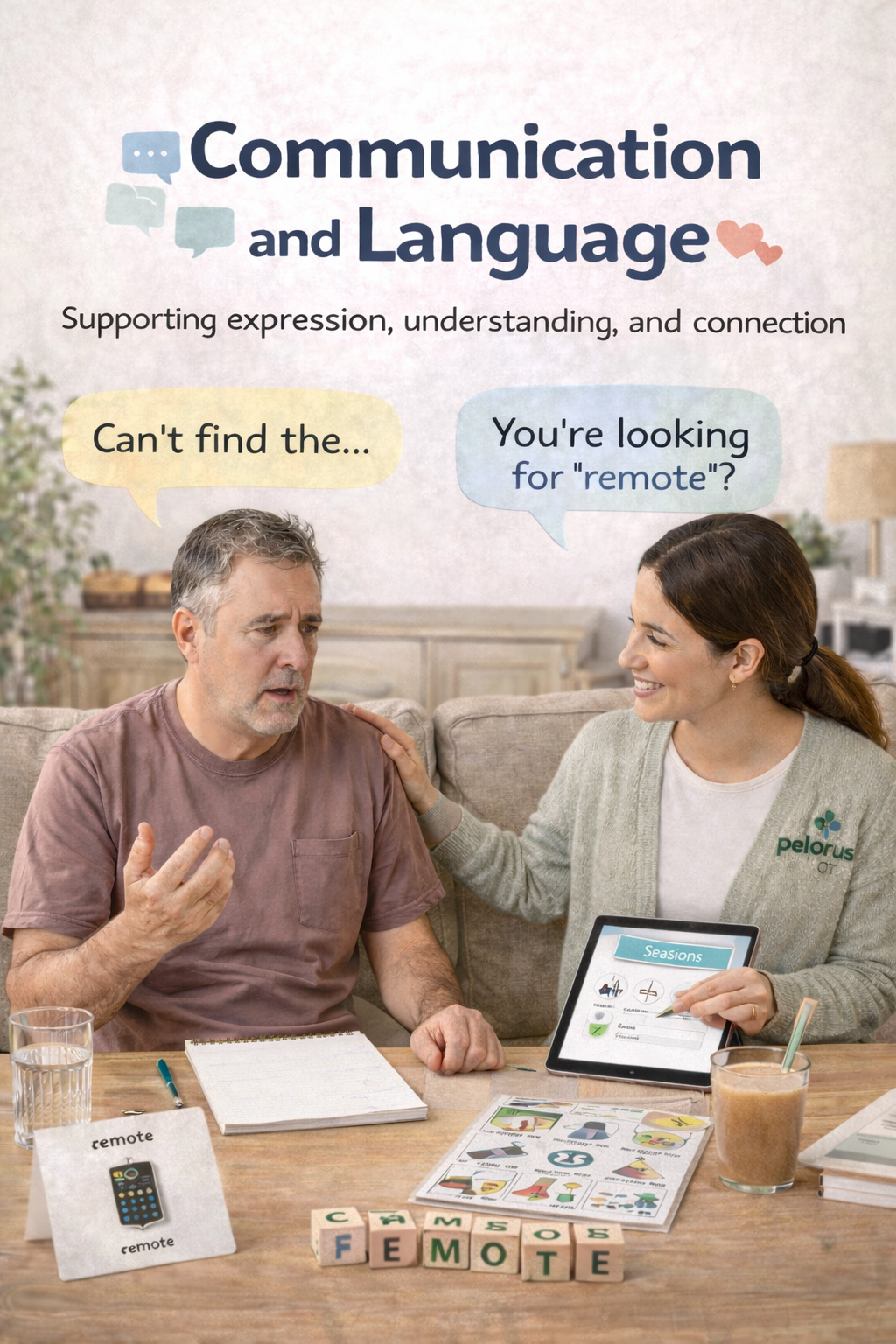
Supporting expression, understanding, and connection
Communication allows us to express our needs, share ideas, and connect with others. It plays an important role in relationships, independence, and participation in everyday life.
Some adults may experience changes in their communication skills due to stroke, brain injury, or neurological conditions. These changes can affect both understanding and expressing language.
At Pelorus OT, our adult communication and language therapy services support individuals to rebuild, adapt, and strengthen their communication in ways that feel practical, meaningful, and aligned with their goals.
Furthermore, adult communication and language therapy supports adults with conditions like aphasia, acquired language disorders, and dysarthria that impact speech and understanding. We focus on functional communication goals to improve everyday conversations, work, and independence, using personalised strategies tailored to changes from injury or illness.
What is Communication and Language Support?
Communication and language support focuses on how a person understands and uses language in everyday situations.
This includes:
- Receptive language – understanding spoken or written information
- Expressive language – using words, sentences, and ideas to communicate
Difficulties may involve:
- Finding the right words
- Forming clear sentences
- Understanding conversations
- Processing information
Clinically, this may be referred to as:
- Aphasia
- Cognitive communication difficulties
Signs You May Benefit from Support
Changes in communication can sometimes be frustrating or isolating, especially when a person knows what they want to say but cannot express it easily. Adult communication and language therapy supports individuals in building the skills and confidence needed to express themselves more clearly and connect with others.
You or your family may notice:
- Difficulty finding words during conversation
- Trouble following or keeping up with discussions
- Short or incomplete sentences
- Difficulty explaining thoughts or ideas
- Reduced participation in conversations
- Frustration when communicating
These challenges can impact confidence and day to day interactions.
How Speech Therapy Helps in Adult Communication and Language Therapy
Speech therapy supports individuals to rebuild communication skills through adult communication and language therapy, while developing practical strategies for everyday situations.
We focus on real-life communication that supports independence and meaningful participation.
We support individuals to:
- Improve understanding of spoken and written language
- Strengthen expressive language and sentence formation
- Develop strategies for word finding and communication breakdowns
- Build confidence in conversations
- Participate more actively in daily interactions
Our Approach
Our approach to adult communication and language therapy is functional, collaborative, and person-centred.
This includes:
- Therapy based on real life goals and situations
- Working at the individual’s pace
- Involving family and support networks
- Respecting each person’s communication style
Our goal is to support communication that is effective, meaningful, and empowering.