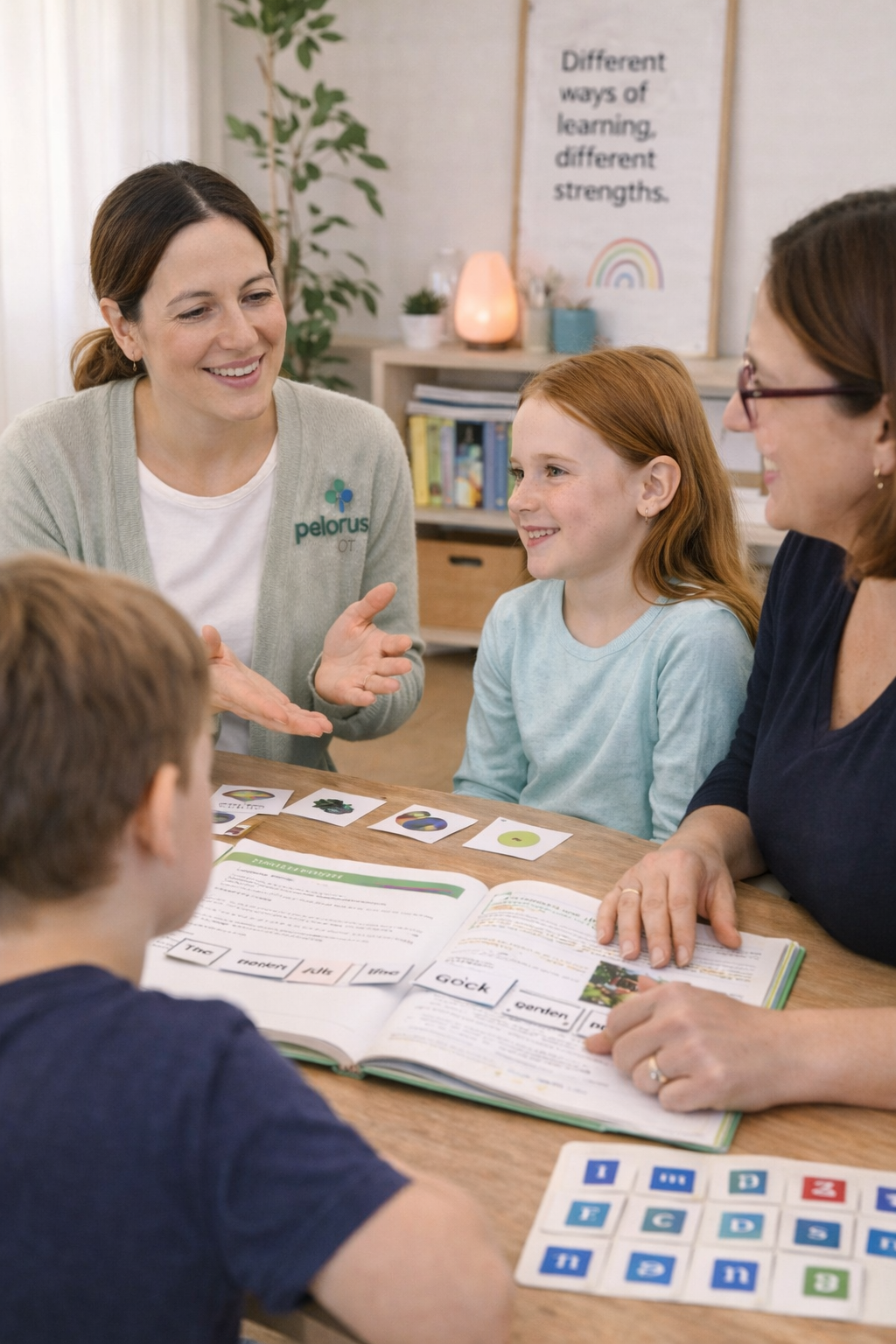
Understanding how your child learns to read and write in their own way
Literacy is an important part of how children access learning, express ideas, and engage with the world around them. Every child develops these skills in their own way, shaped by their strengths, interests, and learning style. Some children may experience differences in how they engage with reading, spelling, or writing. These differences are a natural part of neurodiversity and do not reflect a child’s intelligence or potential.
At Pelorus OT, our Literacy Assessments focus on understanding how your child learns, so we can support them in ways that feel meaningful, accessible, and aligned with who they are.
Phonological awareness, decoding, and reading fluency are key skills used to assess a child’s early literacy development. Phonological awareness involves recognising and working with sounds in spoken words, forming the basis for reading and spelling. Decoding measures the ability to use sound–letter knowledge to read unfamiliar words, while reading fluency assesses accuracy, speed, and expression when reading text. Together, these assessments help identify learning needs and inform targeted school support plans. Findings are shared in clear reports for parents and teachers to guide interventions, classroom support, and literacy goals across home and school.
What is a Literacy Assessment?
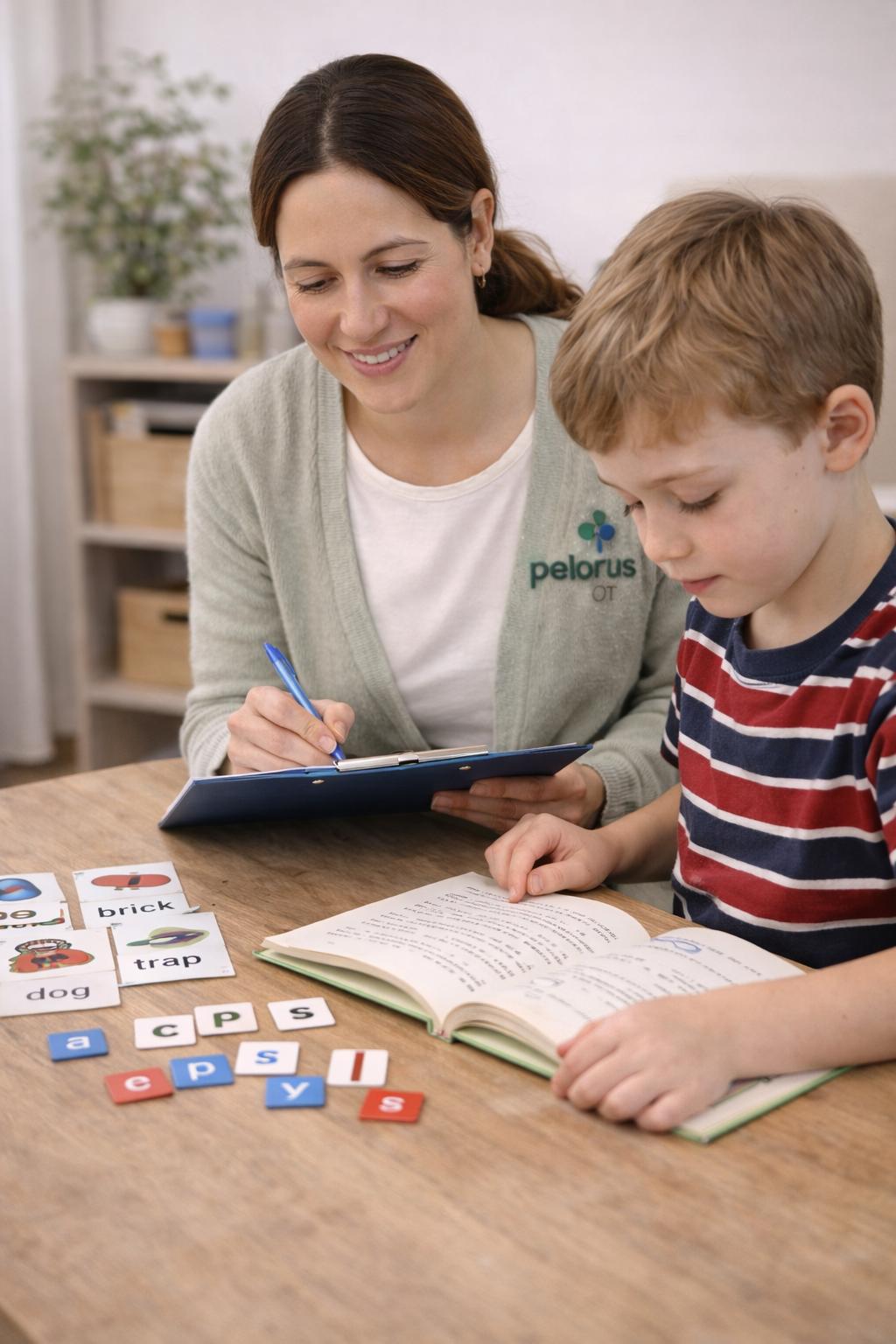
A Literacy Assessment explores the underlying skills that support reading, spelling, and written communication.
Rather than focusing only on outcomes, we look at how a child processes and engages with literacy tasks, and what approaches may best support their learning.
This includes areas such as:
- Phonological awareness – noticing and working with sounds in words
- Phonics – connecting sounds with letters
- Reading skills – including accuracy, fluency, and understanding
- Spelling and written expression
- Language skills that support comprehension and meaning
This assessment is different from a general Speech and Language Assessment because it focuses specifically on literacy development and how children access learning in reading and writing contexts.
When might a Literacy Assessment be helpful?
Some children may benefit from a Literacy Assessment when reading or writing tasks feel effortful, inconsistent, or do not reflect their strengths in other areas.
You might notice your child approaching literacy in their own way, or needing different types of support to engage comfortably in these activities. Phonological awareness, decoding, and reading fluency are key skills used to assess a child’s early literacy development. Phonological awareness involves recognising and working with sounds in spoken words, forming the basis for reading and spelling. Decoding measures the ability to use sound–letter knowledge to read unfamiliar words, while reading fluency assesses accuracy, speed, and expression when reading text. Together, these assessments help identify learning needs and inform targeted school support plans. Findings are shared in clear reports for parents and teachers to guide interventions, classroom support, and literacy goals across home and school.
A Literacy Assessment may be helpful if your child:
- Engages with reading or spelling in a way that looks different from peers
- Finds it challenging to connect sounds and letters
- Approaches literacy tasks with hesitation, fatigue, or frustration
- Prefers to avoid reading or writing activities
- Benefits from alternative or more flexible learning approaches
- Would benefit from a clearer understanding of how they learn best
These experiences are not about something being “wrong.” They are opportunities to better understand your child’s learning profile and provide support that fits.
What does this assessment involve?
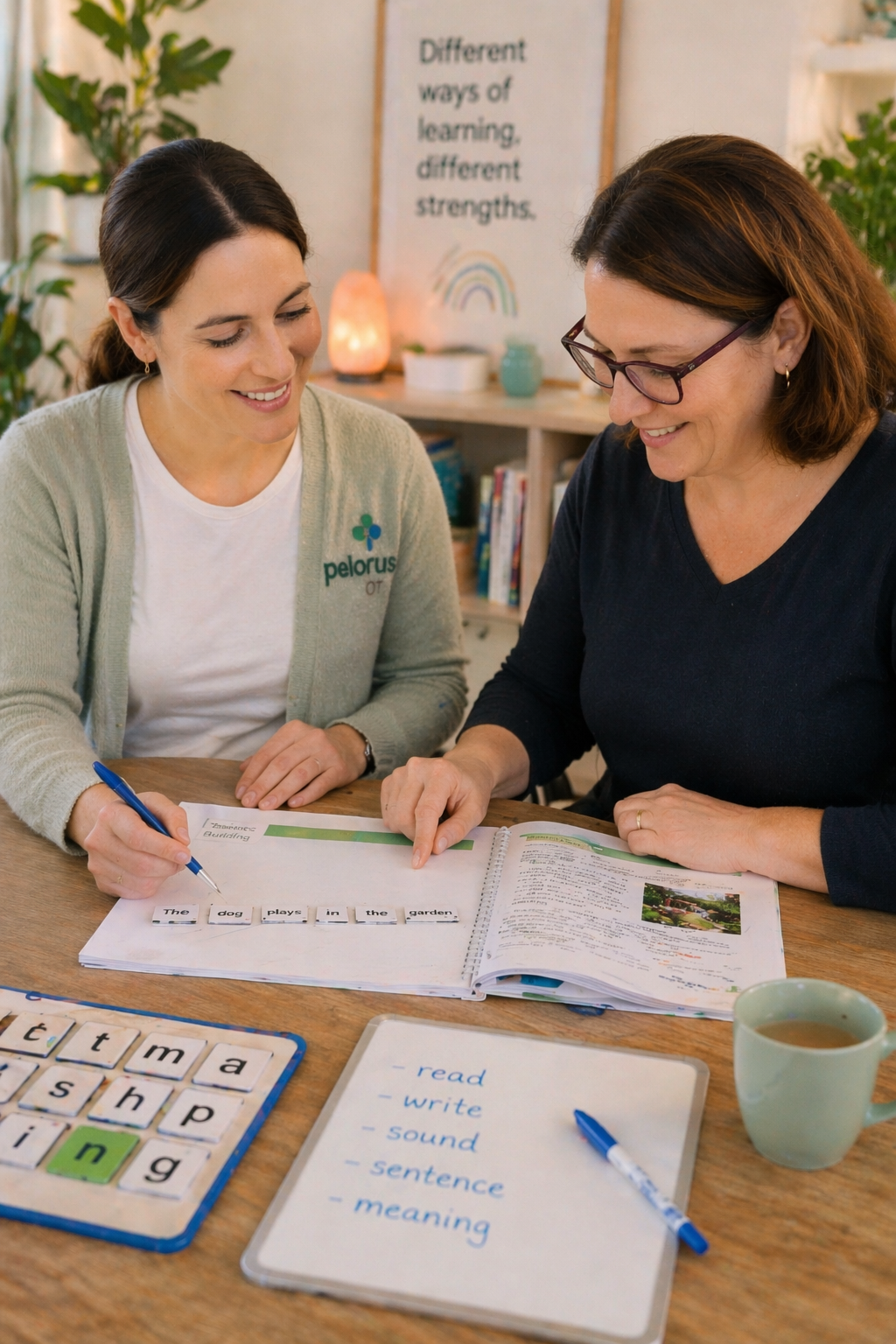
A Literacy Assessment combines structured tools with real-world observation to understand both skill development and learning style.
We aim to create a supportive, low-pressure environment, where your child can engage in ways that feel comfortable and authentic.
The assessment may include:
- Standardised literacy assessment tools
- Tasks exploring phonological awareness and phonics
- Reading and spelling activities
- Observation of how your child approaches tasks
- Conversations with parents, carers, and where appropriate, educators
We focus not just on results, but on how your child learns, responds, and engages throughout the process.
How a Literacy Assessment Helps
A Literacy Assessment provides a clearer understanding of your child’s strengths, preferences, and areas where support may be helpful.
Rather than focusing on “fixing” difficulties, we look at how to adapt environments, strategies, and supports to better match your child’s learning style.
The assessment can help to:
- Identify strengths and learning preferences
- Understand the skills supporting reading and spelling
- Guide personalised therapy and support planning
- Provide practical strategies for home and school
- Support more accessible and inclusive learning experiences
Who is this for?
This assessment is primarily suited to children who would benefit from a deeper understanding of how they engage with literacy.
It may be helpful for:
- Children who learn differently in reading and writing
- Children who benefit from tailored or flexible learning approaches
- Children with speech and language differences that may influence literacy
- Families seeking clearer guidance on supporting literacy at home
- Children who would benefit from a strengths-based understanding of their learning
What you will receive
Following the assessment, you will receive a clear and practical summary that focuses on understanding and support.
We ensure that all information is accessible, meaningful, and useful for everyday application.
You will receive:
- A detailed report outlining strengths and areas for support
- Clear explanations in plain, family-friendly language
- Practical, individualised recommendations
- Strategies for use at home and in learning environments
- Guidance to support confidence and participation in literacy activities
Our Approach
At Pelorus OT, we recognise that literacy development is not one-size-fits-all.
Our approach is neuro-affirming, strengths-based, and respectful of each child’s individuality. We do not aim to change how a child learns, but to better understand their learning profile and support them in ways that feel empowering and sustainable.
We work collaboratively with families and, where appropriate, educators to create environments where children can engage with literacy in ways that work for them.
Why Early Understanding Matters
When a child’s learning profile is understood early, it becomes easier to provide the right supports at the right time.
This can help reduce frustration, build confidence, and create more positive experiences with reading and writing.
Early understanding can support:
- More personalised and effective learning strategies
- Greater confidence and engagement
- Reduced stress around literacy tasks
- Improved participation at school and home
- Stronger foundations for ongoing learning