
15 Heavy Work Activities for Kids: Proprioceptive Activities That Support Regulation
Many children naturally seek movement during the day. They may enjoy climbing, pushing objects, jumping, or engaging in energetic play. For some children, these types of activities are especially helpful because they provide sensory input that helps their bodies feel organised and regulated.
Occupational Therapists often refer to these types of movements as heavy work activities for kids.
Heavy work activities involve movements that place pressure through the muscles and joints. This type of input activates the proprioceptive system, which provides the brain with information about body position, movement, and effort.
These types of activities are often recommended as part of a broader sensory regulation approach, and they are commonly included in a sensory diet, which is a personalised set of sensory strategies designed to support regulation and participation throughout the day. For kids, this is often done by incorporating short sensory breaks for kids to help maintain focus and emotional balance.
For many children, proprioceptive activities for kids can support attention, emotional regulation, body awareness, and participation in everyday activities.
In this article, we explore what heavy work activities are, why proprioceptive input supports regulation, and practical heavy work activity ideas that families and educators can incorporate into everyday routines.
Table of Contents
What Are Heavy Work Activities?
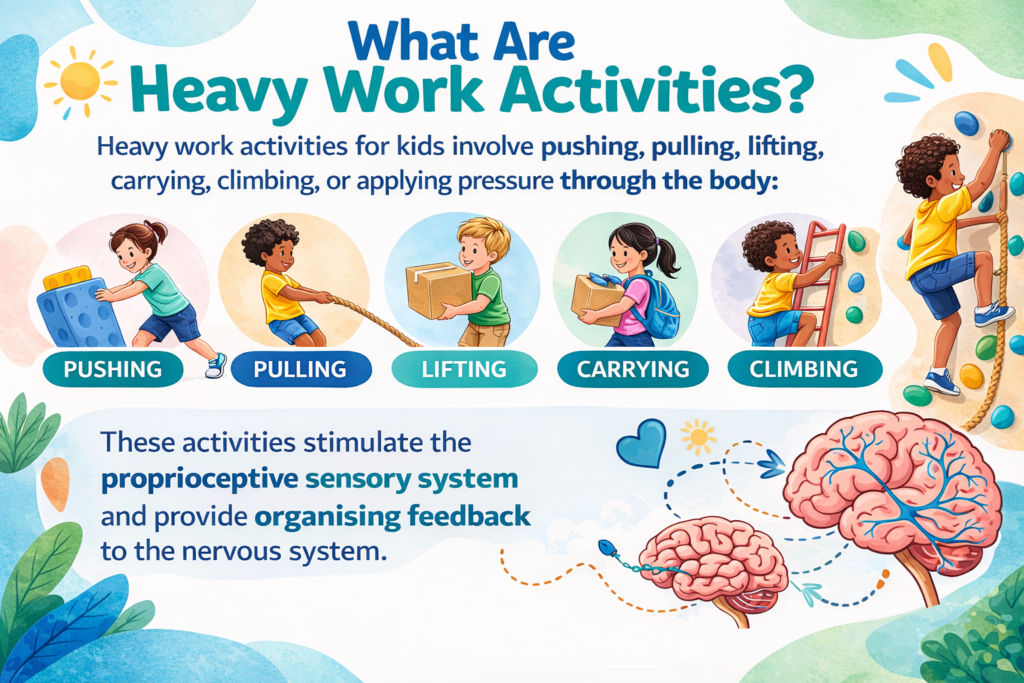
Heavy work activities for kids are movements that involve pushing, pulling, lifting, carrying, climbing, or applying pressure through the body.
These activities stimulate the proprioceptive sensory system, which helps the brain understand where the body is in space and how it is moving.
Because proprioceptive input provides strong feedback to the nervous system, many children experience these activities as organising and grounding.
For this reason, heavy work activities are often included as part of a sensory diet, which is a personalised set of sensory strategies designed to support regulation and participation throughout the day.
Why Proprioceptive Activities Can Support Children

The proprioceptive system plays an important role in helping children understand how their bodies move and how much effort is being used in different movements.
When incorporated regularly into daily routines, heavy work activities may support:
Improved Body Awareness
Proprioceptive input helps children understand where their bodies are in space. This supports coordination, balance, and motor planning.
Better Attention and Readiness for Learning
Short movement breaks that include heavy work activities for kids may help children return to structured tasks feeling more ready to engage.
Emotional Regulation
Activities that involve pushing, pulling, or lifting often provide deep pressure through the body. Many children experience this type of proprioceptive input as calming.
Increased Participation
When children feel more comfortable and regulated in their bodies, it can become easier to participate in learning, play, and everyday routines.
Signs a Child May Benefit from Heavy Work Activities
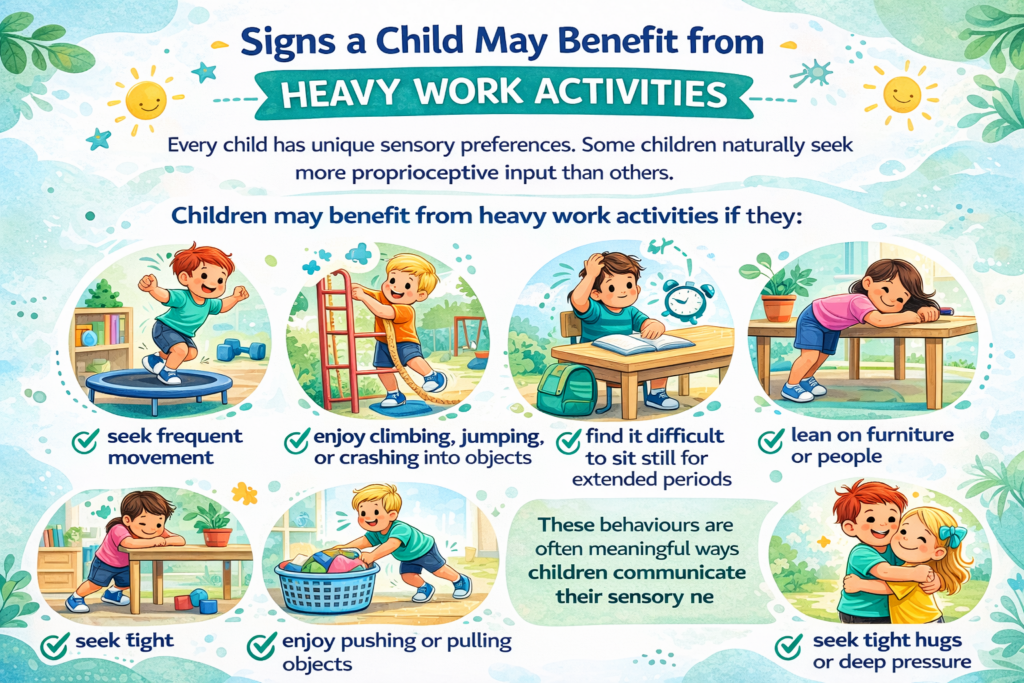
Every child has unique sensory preferences. Some children naturally seek more proprioceptive input than others.
Children may benefit from heavy work activities if they:
- seek frequent movement
- enjoy climbing, jumping, or crashing into objects
- find it difficult to sit still for extended periods
- lean on furniture or people
- enjoy pushing or pulling objects
- seek tight hugs or deep pressure
These behaviours are often meaningful ways children communicate their sensory needs.
15 Heavy Work Activities for Kids
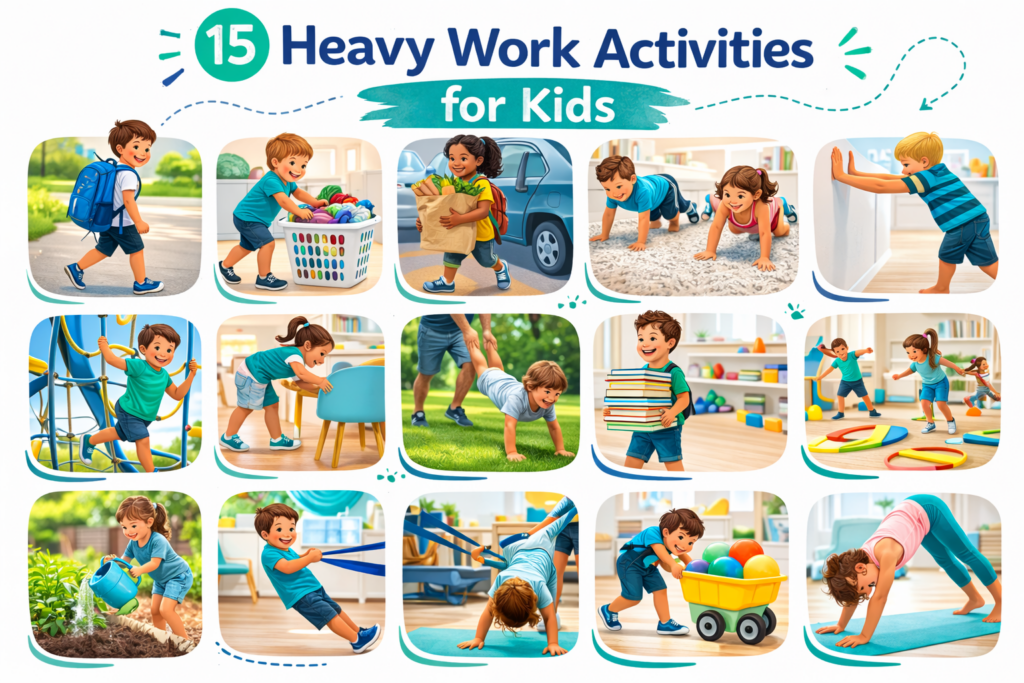
Below are practical heavy work activities for kids that provide helpful proprioceptive input and can be incorporated into everyday routines.
1. Carrying a School Bag
Carrying a school bag provides resistance through the shoulders and arms. If appropriate, adding an extra book can provide additional proprioceptive input.
2. Pushing a Laundry Basket
Children can help push a laundry basket filled with clothes or toys across the floor. This provides strong pushing resistance.
3. Carrying Groceries
Helping carry grocery bags or food items from the car into the house can provide natural heavy work opportunities.
4. Animal Walks
Animal walks engage multiple muscle groups.
Examples include:
- bear walks
- crab walks
- frog jumps
These playful movements are excellent proprioceptive activities for kids.
5. Wall Push-Ups
Children can place their hands on a wall and push their bodies forward and back. This simple activity provides deep pressure through the arms and shoulders.
6. Tug-of-War
Tug-of-war games provide pulling resistance and can be a fun way to incorporate heavy work into play.
7. Climbing Playground Equipment
Climbing ladders, ropes, and monkey bars engages the whole body and provides strong proprioceptive input.
8. Moving Chairs
Children can help push chairs under tables or move lightweight furniture when tidying up.
9. Wheelbarrow Walking
In this activity, an adult holds the child’s legs while the child walks on their hands. This engages the shoulders and core muscles.
10. Carrying Books
Children can help carry books between rooms or place books on shelves.
11. Obstacle Courses
Obstacle courses can include crawling, climbing, pushing objects, and jumping.
12. Pushing a Toy Cart or Wheelbarrow
Pushing toys, carts, or a small wheelbarrow in the garden provides helpful resistance.
13. Helping With Gardening
Activities such as carrying watering cans, moving soil bags, or pushing garden tools can provide natural heavy work opportunities.
14. Resistance Bands
Resistance bands attached to chair legs or used during movement breaks can provide proprioceptive input.
15. Yoga or Stretching
Certain yoga poses involve pushing through the hands and feet, which provides gentle heavy work input.
How to Use Heavy Work Activities Throughout the Day
Heavy work activities are often used as part of a broader sensory diet, where Occupational Therapists recommend specific sensory strategies to support regulation throughout the day.
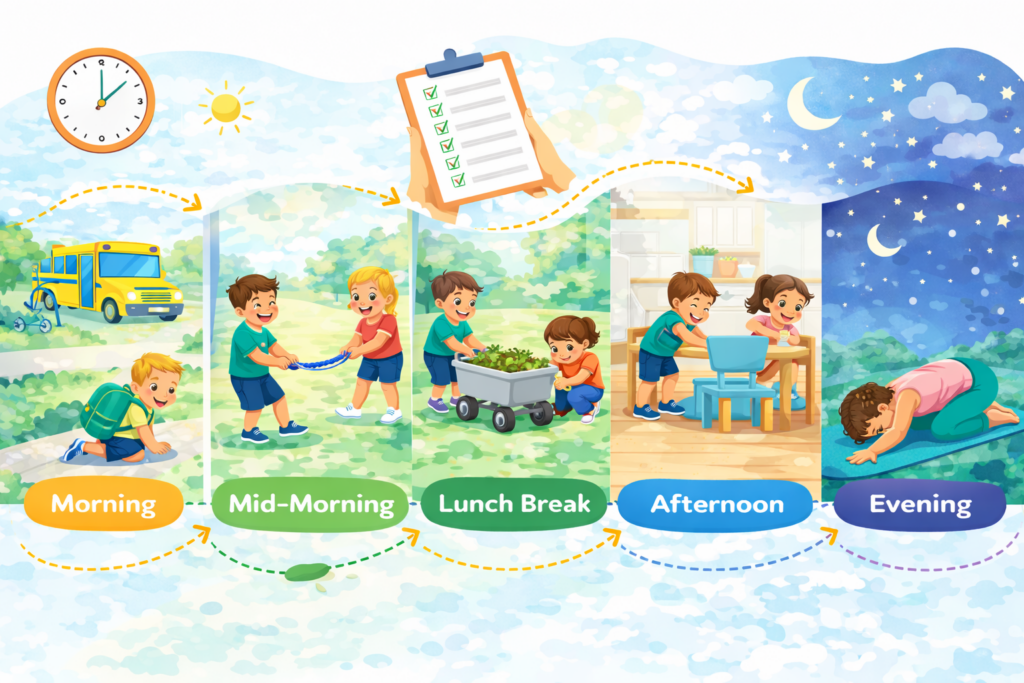
Many opportunities for proprioceptive input already occur throughout the day.
Morning
Children can:
- carry their school bag
- help pack their lunch bag
- push chairs under the table
Before School
Examples include:
- carrying groceries inside
- pushing a laundry basket
- doing a few wall push-ups
These activities can help the body feel organised before transitioning to school.
At School
Heavy work opportunities may include:
- carrying books between classrooms
- helping move chairs
- pushing chairs under tables
- helping carry sports equipment
After School
Examples include:
- climbing at the playground
- riding a bike or scooter
- pushing a toy carthelping carry groceries
Evening
Calmer heavy work activities may include:
- tidying toys into storage bins
- pushing chairs under the table
- yoga or stretching
By incorporating heavy work activities for kids into everyday routines, families can support sensory regulation without needing to create entirely new schedules.
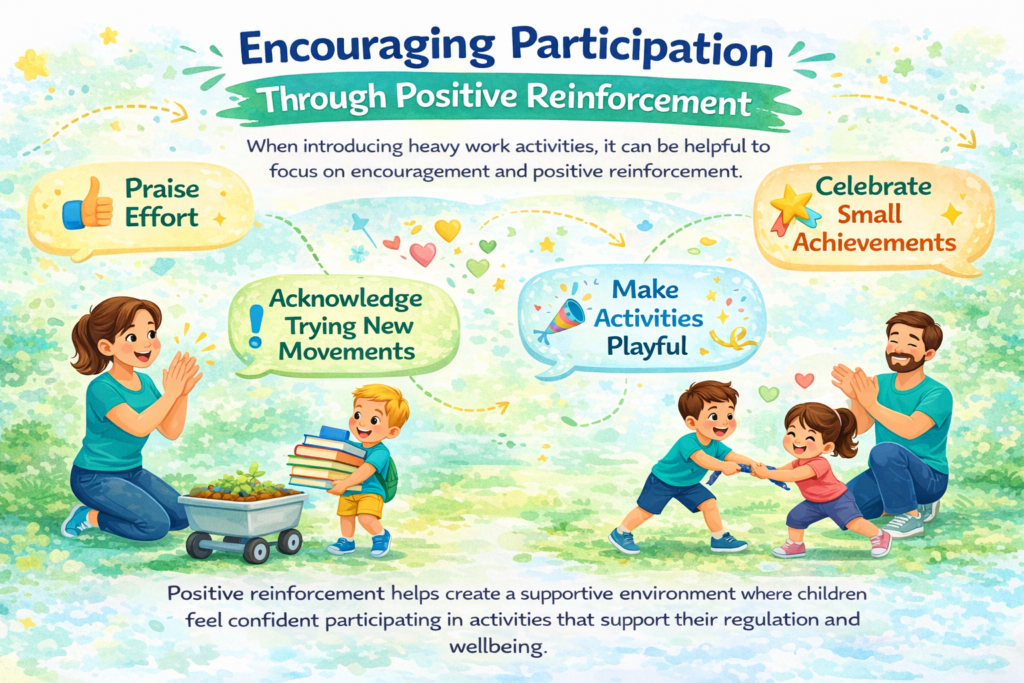
Encouraging Participation Through Positive Reinforcement
When introducing heavy work activities, it can be helpful to focus on encouragement and positive reinforcement.
Children often respond best when their efforts are acknowledged and appreciated.
For example:
- praising effort
- celebrating small achievements
- making activities playful
- acknowledging when children try new movements
Positive reinforcement helps create a supportive environment where children feel confident participating in activities that support their regulation and wellbeing.
When to Seek Support from an Occupational Therapist
If sensory needs significantly affect a child’s participation in daily activities, an Occupational Therapist can help assess sensory preferences and develop personalised strategies.
An OT may support families by:
- conducting a sensory assessment
- identifying sensory preferences and triggers
- developing a personalised sensory diet
- recommending proprioceptive activities for kids that fit daily routines
Sensory strategies are most effective when they are individualised and integrated into everyday activities.
How Pelorus OT Can Help
At Pelorus OT, our Occupational Therapists support children and families to build confidence and participation in everyday activities.
Our therapists provide support across areas such as:
- sensory regulation
- emotional regulation
- daily living skills
- school participation
- motor skill development
We work collaboratively with families and educators to develop practical strategies that fit naturally into everyday routines, including sensory diets and heavy work activities.
Get Support from Pelorus OT
If you feel your child may benefit from additional movement or heavy work activities, an Occupational Therapist can help identify sensory preferences and recommend practical strategies that fit naturally into daily routines.
At Pelorus OT, our therapists can conduct a sensory assessment and work with families to develop personalised strategies, including heavy work activities and a structured sensory diet to support regulation, attention, and participation in everyday activities.
If you would like to learn more about how sensory strategies work, you can also read our guide:
👉 [What Is a Sensory Diet? A Guide for Parents and Teachers]
👉 [What are Sensory Activities? A list of 25 Sensory Activities for Kids]
These articles explains how sensory activities can be used throughout the day to support regulation and includes free downloadable resources.
If you would like support understanding your child’s sensory needs, feel free to reach out to the Pelorus OT team.
Contact Us to discuss further or submit a referral using the button below:
Pelorus OT currently provides services across Melbourne and Adelaide.